Accessibility might be the buzzword in modern gaming, but there exists a dedicated faction of players who actively seek out punishment. These digital masochists find genuine pleasure in games that don't hold their hands, where every victory feels earned through sweat, strategy, and occasional controller-threatening frustration. The open-world genre, often associated with leisurely exploration, is home to some of the most brutal tests of skill in the gaming landscape.
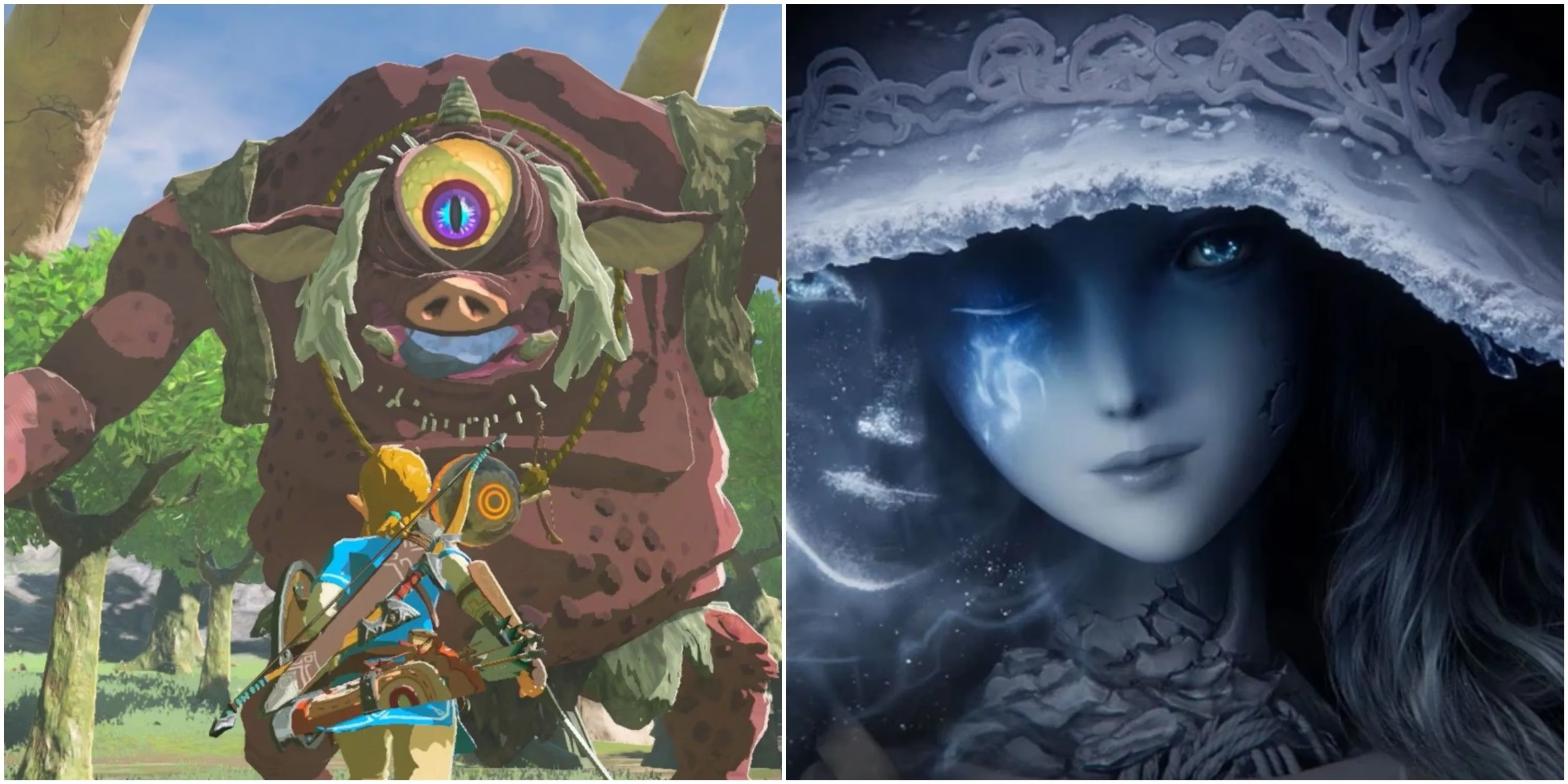
Take The Legend of Zelda: Breath of the Wild, for instance. Nintendo's masterpiece is deceptively tranquil. Early on, players quickly learn that the picturesque landscapes are fraught with danger. The base game presented a solid challenge, but for veterans, it wasn't quite enough. Enter Master Mode, introduced in The Master Trials DLC. This isn't a simple stat-increase mod; it's a complete recalibration of the experience. Imagine cresting a hill on the Great Plateau, only to be greeted by a Lynel—a creature meant for later-game encounters—casually patrolling the starting area. Golden enemies with inflated health pools and a devilish health regeneration mechanic ensure that hesitation is fatal. Combat becomes a delicate ballet of aggressive offense, as letting up for even a moment allows your foe to recover. It transforms the game from an adventure into a survival thriller.
Then there's Valheim, the Viking survival sensation that took the world by storm. Its beauty lies in its simplicity, which is also the source of its difficulty. This isn't a game where you mindlessly consume food for a quick health boost. Oh no. Eating is a tactical decision. Different foods provide varying amounts of health, stamina, and regeneration buffs for different durations. Venturing into a swamp without the right meal prepping is a recipe for a quick and soggy grave. For those who find the standard loop too forgiving, Hardcore mode awaits. This feature is tailor-made for experts, turning every enemy into a potential run-ender. Death is not a minor inconvenience; it's a catastrophic event that demands respect for the world and its inhabitants.
For a dose of old-school ruthlessness, look no further than the Gothic series. This classic is a masterclass in hostile world design. The game world does not care about your existence. Beginner players quickly learn that even the weakest foes can become a lethal threat if they attack in groups. The combat system is deliberate and punishing, rewarding patience and precision over button-mashing. The key to survival isn't finding a better sword immediately; it's about running to the nearest settlement and investing hard-earned experience points into fundamental combat skills. It's a game that forces you to acknowledge your weakness before granting you the power to overcome it.
The S.T.A.L.K.E.R. series offers a different kind of challenge—one of atmosphere and constant attrition. The Chernobyl Exclusion Zone is not just filled with enemies; it is the enemy. Players must manage a triad of survival metrics: hunger, radiation, and physical health. Anomalies—deadly, invisible environmental hazards—can end a journey in an instant. The first game in the series is often considered the most brutal introduction to this universe. It's a slow, methodical crawl through a landscape that wants you dead, where success is measured not in missions completed, but in minutes survived.
FromSoftware's Elden Ring is, of course, the modern titan of difficult open worlds. While veterans of the Souls series might debate its place on the difficulty podium, there's no denying its capacity to challenge. The game's genius is its freedom. You can, theoretically, overlevel and trivialize many encounters. But that's a choice. The true Elden Ring experience involves facing demigods like Malenia and Radahn at a level that demands perfection. The cycle of death, learning, and eventual victory against these towering bosses is a feeling few other games can replicate. It's a game that respects the player's intelligence and perseverance.
Pathologic 2 is in a league of its own. It's less a game and more a harrowing simulation of desperation. This sequel removes the janky exploits of the original and replaces them with relentless, systemic cruelty. There is no save-scumming. Death carries permanent debuffs. Time is constantly working against you. It's a nightmare, but a compelling one. The surreal setting and haunting atmosphere create a bizarre sense of purpose, pushing players to endure the suffering and uncover the town's secrets.
Finally, we have Kenshi, the ultimate sandbox of suffering. This game provides the player with precisely nothing: no story, no guidance, no inherent superiority. You are just another insignificant creature in a vast, unforgiving world. The difficulty here is foundational. You will fail. Repeatedly. Your first character will likely be eaten by wildlife, enslaved by bandits, or simply starve to death. These failures are the tutorial. Through them, you learn the importance of building a squad, researching technology, and creating a fortified base. The reward is not beating the game, but the emergent story of rising from a helpless wretch to a power in the world. It is, perhaps, the purest form of a challenging open-world experience.
Leave a Comment