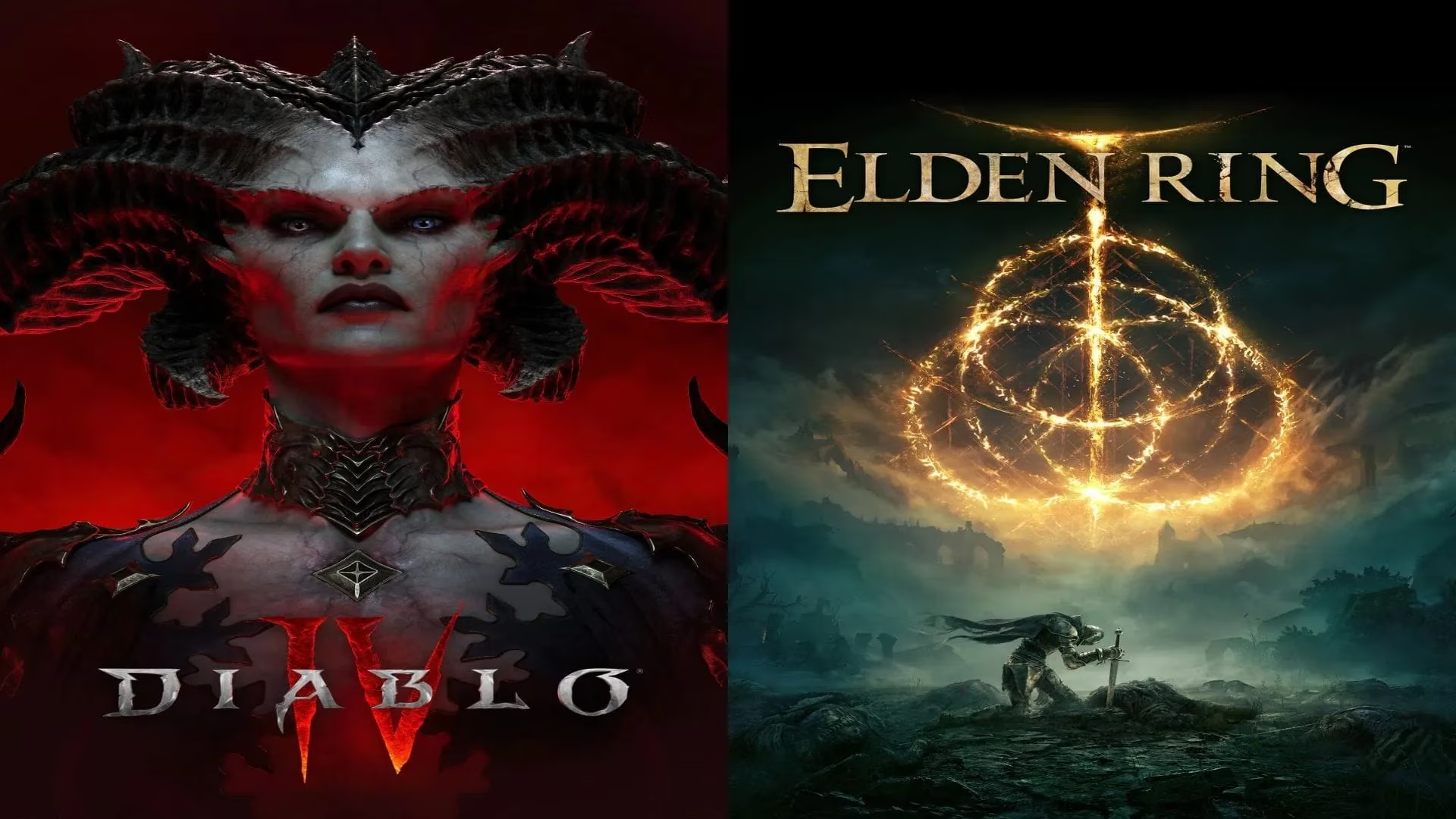
In the grand arena of gaming, two colossal figures, Diablo 4 and Elden Ring, have been duking it out for players' attention for a couple of years now. It's like watching a heavyweight boxer who loves a good party go up against a stoic, philosophical samurai—both are masters of their craft, but they speak entirely different languages to their fans. One’s all about the chaotic, loot-filled bash with your buddies, and the other… well, the other prefers you sit quietly in a corner and contemplate your many, many deaths. As we look at the gaming landscape in 2026, these titans haven't just aged; they've become landmarks, each defining a distinct path to digital glory.
The Camera's-Eye View: A Matter of Perspective
Let's start with the most obvious difference: how you see the world. Diablo 4 is the grand strategist looking down from the heavens. Its top-down view is a classic, a legacy feature that’s basically the series' comfy old armchair. This perspective is perfect for its core identity: a frenetic hack-and-slash RPG where you’re mowing down waves of demons like you’re clearing weeds. It’s all about the fast-paced action and that sweet, sweet loot explosion. You know the drill—click, smash, collect, repeat. It’s a gameplay loop that’s been satisfying players for decades, and honestly, if it ain’t broke, don’t fix it.
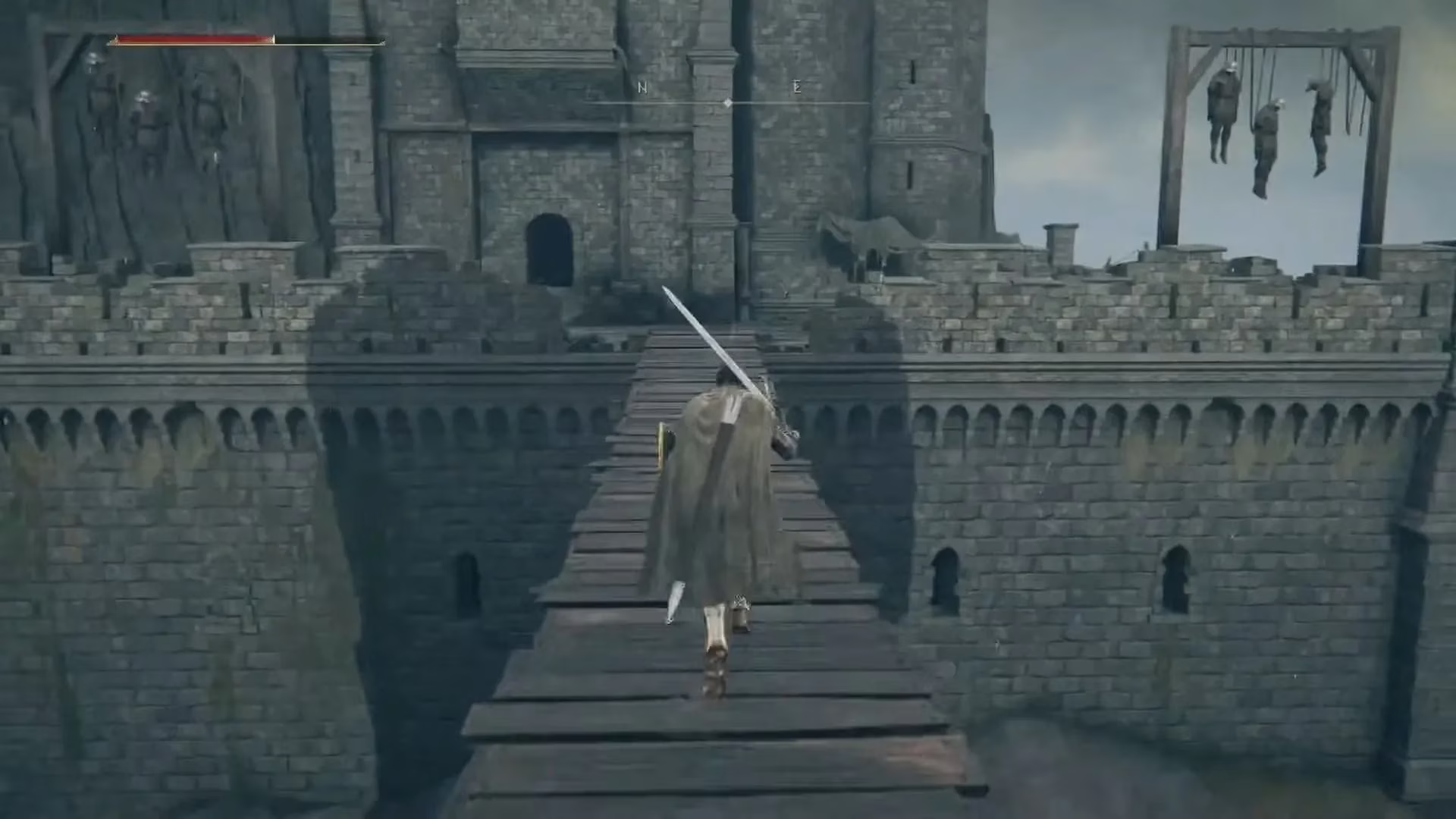
Elden Ring, on the other hand, plants the camera right over your shoulder. This third-person view is your window into a breathtaking, immersive world. It’s intimate; you see every scratch on your armor and every blade of grass in the field. This perspective is crucial for its trademark combat—a deliberate, stamina-managing, strategy-heavy dance of death born from the Souls lineage. You can’t just button-mash here. Every dodge, block, and swing requires precision timing. It’s less of a brawl and more of a deadly chess match where the pawns hit back... hard.
World Design: Guided Tours vs. The Great Unknown
When it comes to exploration, these two games are on opposite ends of the spectrum. Diablo 4 presents a world of interconnected zones. Think of it as a well-organized, albeit demon-infested, theme park. The design expertly funnels you towards your next objective, primarily through its signature dungeons. The core gameplay loop is beautifully simple: enter dungeon, clear monsters, grab loot, get stronger. It’s a focused, goal-oriented experience that always gives you a clear “what’s next.”
Elden Ring says, “Forget the map, here’s a horse.” Its vast, seamless open world is built for pure, unadulterated discovery. The motivation to explore comes from the world itself—a hidden catacomb behind a waterfall, a cryptic NPC on a crumbling bridge, a terrifying boss in a forgotten valley. The game doesn’t force a path; it lays out a continent and whispers, “Good luck.” This freedom is intoxicating, letting you tackle challenges in any order you dare. It’s the difference between following a guided tour and being dropped in the wilderness with a compass that only sometimes points north.
Building Your Legend: Class vs. Canvas
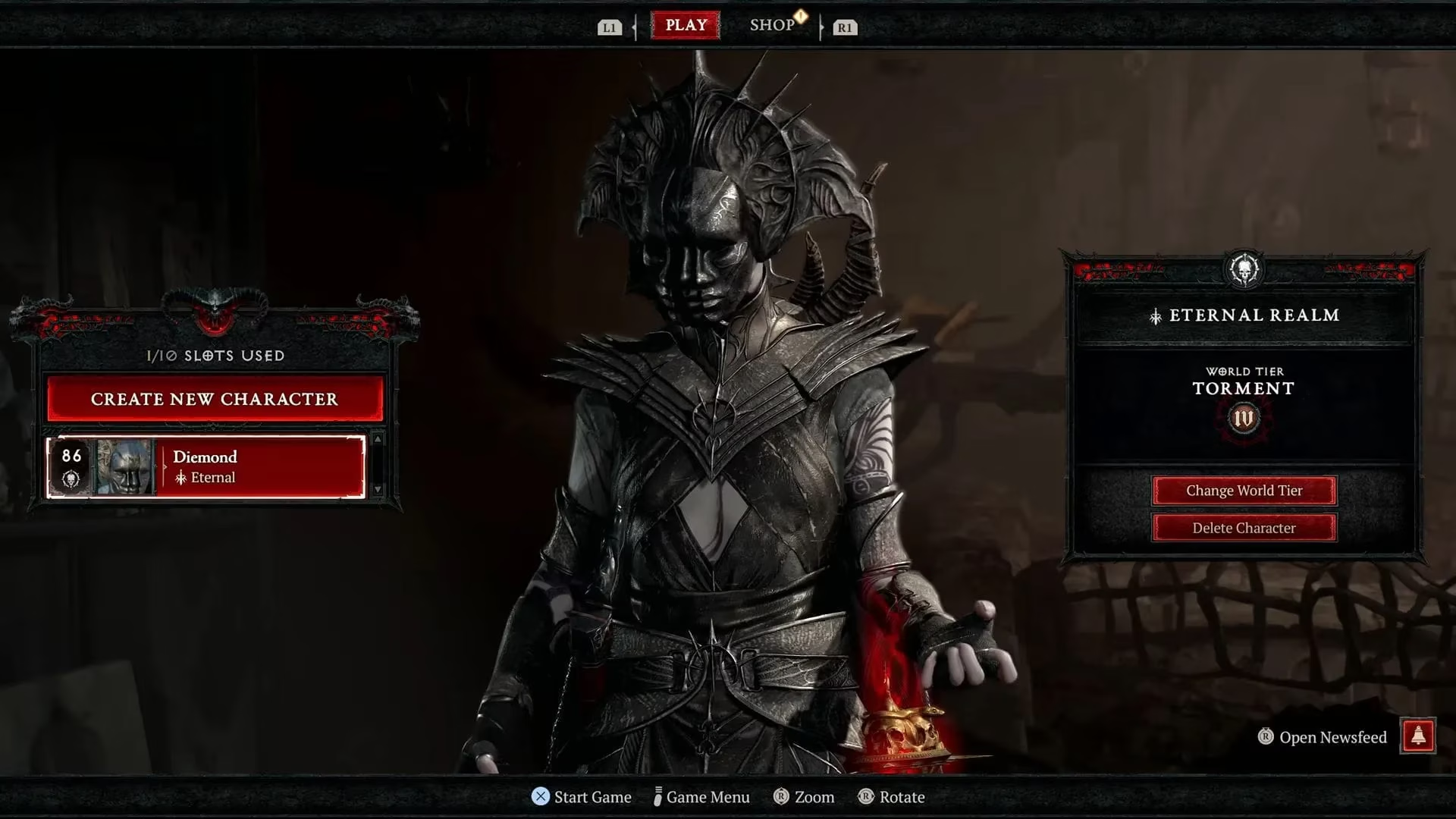
How you build your hero is another fundamental split. Diablo 4 is all about the class fantasy. You pick from iconic archetypes like the brutish Barbarian or the mystical Sorceress, each with a deep, unique skill tree. Your power progression, however, is intimately tied to your gear. That epic two-handed axe or those legendary boots aren’t just stat sticks; they’re the engine of your growth. The hunt for the perfect loot is the heartbeat of the game. It’s like your character’s strength is literally sewn into the fabric of their clothes—talk about fashion souls!
Elden Ring treats your character as a blank canvas. There are no predefined classes, only starting templates. From there, you have unparalleled freedom to create a truly unique build by leveling up core stats like Strength, Dexterity, and Intelligence. Want a spell-slinging knight in heavy armor? Go for it. A nimble archer who dabbles in dark magic? Why not! Your progression is a personalized journey of stat allocation and gear choice, allowing for near-infinite experimentation. It’s the ultimate RPG sandbox for tinkerers.
The Rhythm of Battle: Symphony vs. Solo
Combat feel is where the games’ personalities shine brightest. Diablo 4’s combat is a heavy metal symphony of destruction. You unleash dazzling area-of-effect abilities on cooldowns, vaporizing hordes of enemies in a satisfying shower of numbers and items. It’s challenging but accessible, and it becomes an absolute blast in co-op. There’s a visceral joy in the chaos, a feeling of overwhelming power that’s hard to match. It’s the video game equivalent of a popcorn action movie—loud, fun, and incredibly repeatable.
Elden Ring’s combat, in stark contrast, is a tense, methodical duel. It’s slower, more deliberate, and brutally punishing. Rushing in means a quick trip back to the last checkpoint. Every enemy encounter demands respect, observation, and precise execution. The game is famous for its ruthless bosses that require you to learn, adapt, and memorize attack patterns. Victory isn’t about unleashing hell; it’s about patience, timing, and that perfect parry. Winning a tough fight provides a surge of triumph that’s almost addictive. It’s the “git gud” philosophy in its purest form, and boy, does it feel good when you finally do.
Telling the Tale: Cinematic Epic vs. Environmental Mystery
Finally, the way these worlds tell their stories couldn't be more different. Diablo 4 follows a more traditional, cinematic narrative structure. You’re plunged into the eternal, gothic conflict between the High Heavens and the Burning Hells, following a main story campaign supported by side quests. The lore of angels, demons, and Sanctuary is presented through cutscenes and dialogue, offering a clear, directed epic for the player to experience. You’re along for the ride, and it’s a heck of a story.
Elden Ring... well, let's just say it doesn’t believe in spoon-feeding. Its story is woven into the very fabric of its environment. You piece together the deep, melancholic lore of the Lands Between through cryptic item descriptions, sparse NPC dialogues, and architectural storytelling. The grand narrative is a puzzle you must solve yourself, leading to countless community theories and discussions. It’s a dark fantasy mystery that rewards the curious and the observant. You don’t just watch the story; you archaeologically dig it up, one shattered piece at a time.
So, in 2026, the choice between Diablo 4 and Elden Ring isn't about which game is better—that’s a fool's errand. It’s about what kind of adventure you're craving. Do you want the empowering, social, loot-driven rollercoaster? Diablo 4 is your jam. Or do you seek a solitary, challenging journey of discovery and mastery through a world shrouded in mystery? Then the Lands Between await. Both are masterclasses in design, proving that in the world of RPGs, there’s more than one path to becoming a legend. Now, if you'll excuse me, I have a dungeon to run... and a dragon to, uh, probably die to a few dozen times.
Leave a Comment