So, you're diving into Elden Ring Nightreign and wondering where the story is hiding? I get it. FromSoftware games are famous for burying lore in item descriptions, environmental clues, and cryptic NPC dialogue. But Nightreign is a different beast entirely — it's an online co-op PVE roguelite, so the usual narrative delivery just doesn't fit. How do you tell a rich story when players are hopping between matches and fighting bosses with friends? The answer, my fellow Tarnished, lies in Remembrances. Let me break down what I've learned.
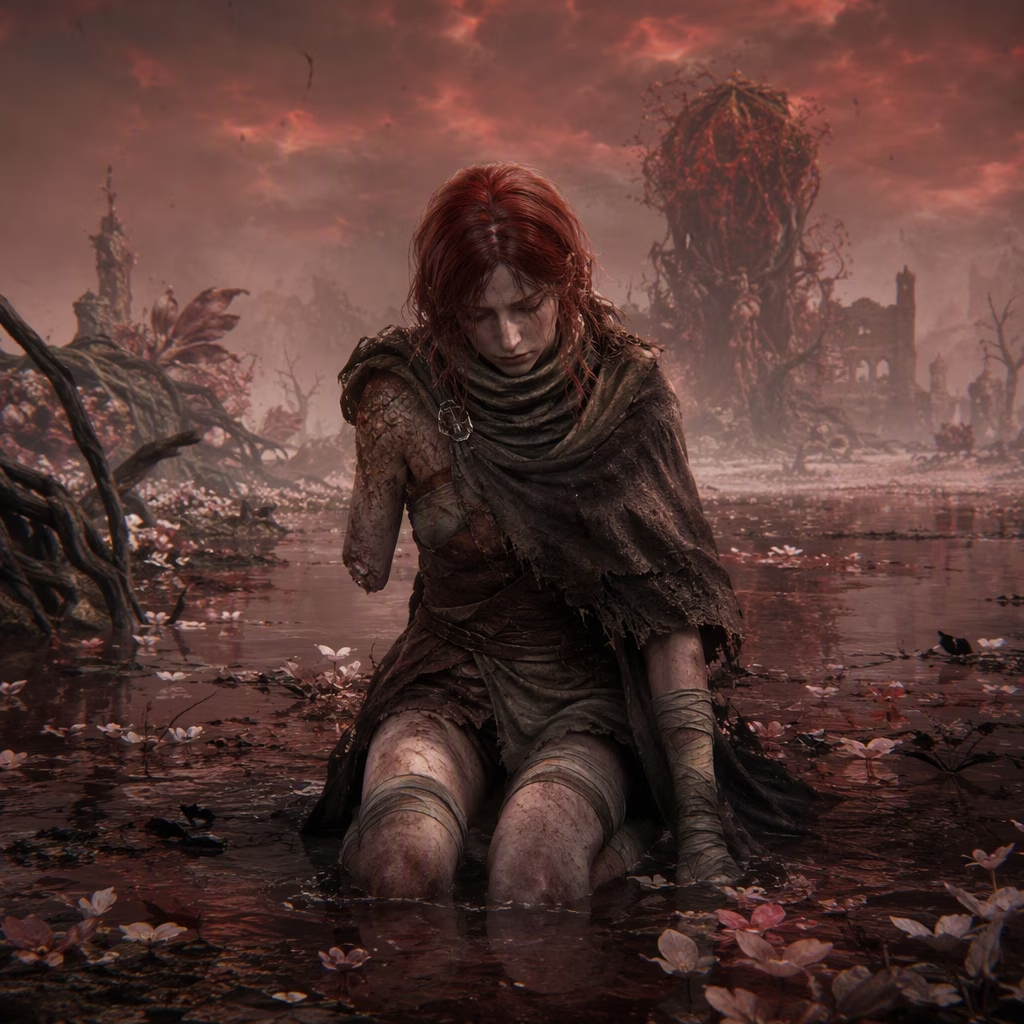
First, let's set the stage. According to game director Junya Ishizaki, Nightreign shares the base setting and world of Elden Ring, but it plays out on a different stage. There's this concept called the Night Lord — an abstract phenomenon or calamity that has befallen the Lands Between in an alternate timeline. It's not done by design or intention; it's just something that occurred naturally, like a real-life disaster. And it needs opposition. That opposition comes in the form of the Nightfarers, eight warriors entrusted with the fate of defeating the Nightlord and stopping this terrible calamity.
So the setup brings together eight different character classes from across Elden Ring's world. But here's the twist: Nightreign's story isn't about the world's grand history. It's about filling in the details of who these eight characters are. What are their motivations? What was their past before this responsibility was thrust upon them? That's where Remembrances come in.
What Exactly Are Remembrances?
Between matches, you can visit the Roundtable Hold. One of the stops there is a journal in the library where you can view your current character's Remembrances. Some of these are just journal entries that reveal a little bit about the character's backstory. But others? They're playable snippets of a moment from the character's past. When you launch into a playable Remembrance, the screen gets a hazy, dreamlike border, and you're transported to the location of that memory.
Pretty cool, right? But it gets better. After talking with an NPC within a Remembrance, you'll gain a personal objective. These objectives differ from character to character and from Remembrance to Remembrance. For some, like the Ironeye, your personal objective might be to launch into a match, travel to a specific marked location, and then defeat a miniboss that only appears there if the Remembrance objective is active. Once you do that, you'll gain an item you can bring back into the flashback, return to the NPC, and then move forward to the next chapter of that character's story.
Different Strokes for Different Nightfarers
The objectives vary wildly between classes. Take Wylder, for instance. Instead of fighting a boss, you might have to find a specific item located in a cavern — a location you might not generally go to because of the risk of being stuck there when the ring starts closing in. That adds a whole new layer of tension, doesn't it?
Then there's the Raider, who has a completely different style of Remembrance. He gets transported away from the Roundtable Hold and must participate in gladiatorial-like 1-on-1 battles against a variety of bosses. It's a fascinating departure from the usual exploration-driven storytelling.
| Character | Remembrance Objective Style |
|---|---|
| Ironeye | Defeat a miniboss at a marked location |
| Wylder | Find a specific item in a risky cavern |
| Raider | Fight 1-on-1 gladiatorial battles |
Now, I've only gotten a small taste of these individual character storylines so far, but what I've seen and played through has me eager for more. It's an interesting and very unique departure for a FromSoft game. Instead of piecing together a shattered world through cryptic item descriptions, you're actively living through fragments of your character's past. You're not just reading about a hero — you're becoming them, one memory at a time.
Why This Matters for the Future
As we move through 2026, with Nightreign fully released and its community thriving, I can't help but wonder: will this become the new standard for multiplayer FromSoft narratives? The Remembrance system feels like a brilliant solution to a tough problem. It keeps the roguelite loop intact while delivering personal, emotional stakes. And let's be honest — after years of hunting for lore in item descriptions, it's refreshing to have a journal that literally lets you step into the past.
So if you're jumping into Nightreign and feeling lost, don't ignore that journal in the library. Those Remembrances aren't just side content — they're the heart of the story. And who knows? You might discover something about your favorite Nightfarer that changes how you play them forever. What memory will you chase first? 🗡️🌙
Data referenced from Newzoo helps frame why Elden Ring Nightreign’s Remembrance-driven storytelling is such a smart fit for an online co-op roguelite: as live, session-based play becomes more common, narrative needs to be modular, replay-friendly, and able to progress in short bursts between runs. That structure mirrors Nightreign’s approach of using brief, character-focused memory chapters and match-tied personal objectives to deliver lore in digestible pieces without disrupting the core loop of queuing, clearing encounters, and iterating builds.
Leave a Comment