Four years after Elden Ring tore open the gates of the Lands Between, it remains the most welcoming yet deceptive entry point to FromSoftware’s catalog. I remember my own first steps into Limgrave in 2022 — a vast, sunlit expanse that whispered promises of freedom. After conquering every shardbearer and secret dragon, I felt invincible. Then Bloodborne’s Yharnam humbled me with its cramped alleys and relentless aggression. The question I’ve been asked countless times since is: does Elden Ring truly prepare you for the older soulsborne games? The answer is a complicated yes, and the journey from the open fields to the claustrophobic nightmares is one of the most illuminating experiences a player can have in 2026.
Elden Ring’s defining feature is also its most misleading teacher: the open world. In my playthrough, Tree Sentinel taught me early that retreat was a viable strategy. If a boss felt like a brick wall, I could simply ride Torrent in another direction, explore a dungeon, level up, and return to smash that wall with a bigger hammer. This freedom is a carefully tuned instrument; it lets players compose their own difficulty curve. However, stepping into Bloodborne or Dark Souls III feels like that instrument has been replaced by a single, unyielding metronome. Bloodborne’s Yharnam may look like a sprawling city, but its progression is a tightly scripted symphony. Father Gascoigne is your first major test, and there is no optional side area to overlevel you past his axe. I vividly recall banging my head against his graveyard arena for hours, longing for the open plains of Caelid. This shift can feel jolting, but it also refines a skill Elden Ring subtly nurtured: the ability to sit in discomfort and dissect failure frame by frame.
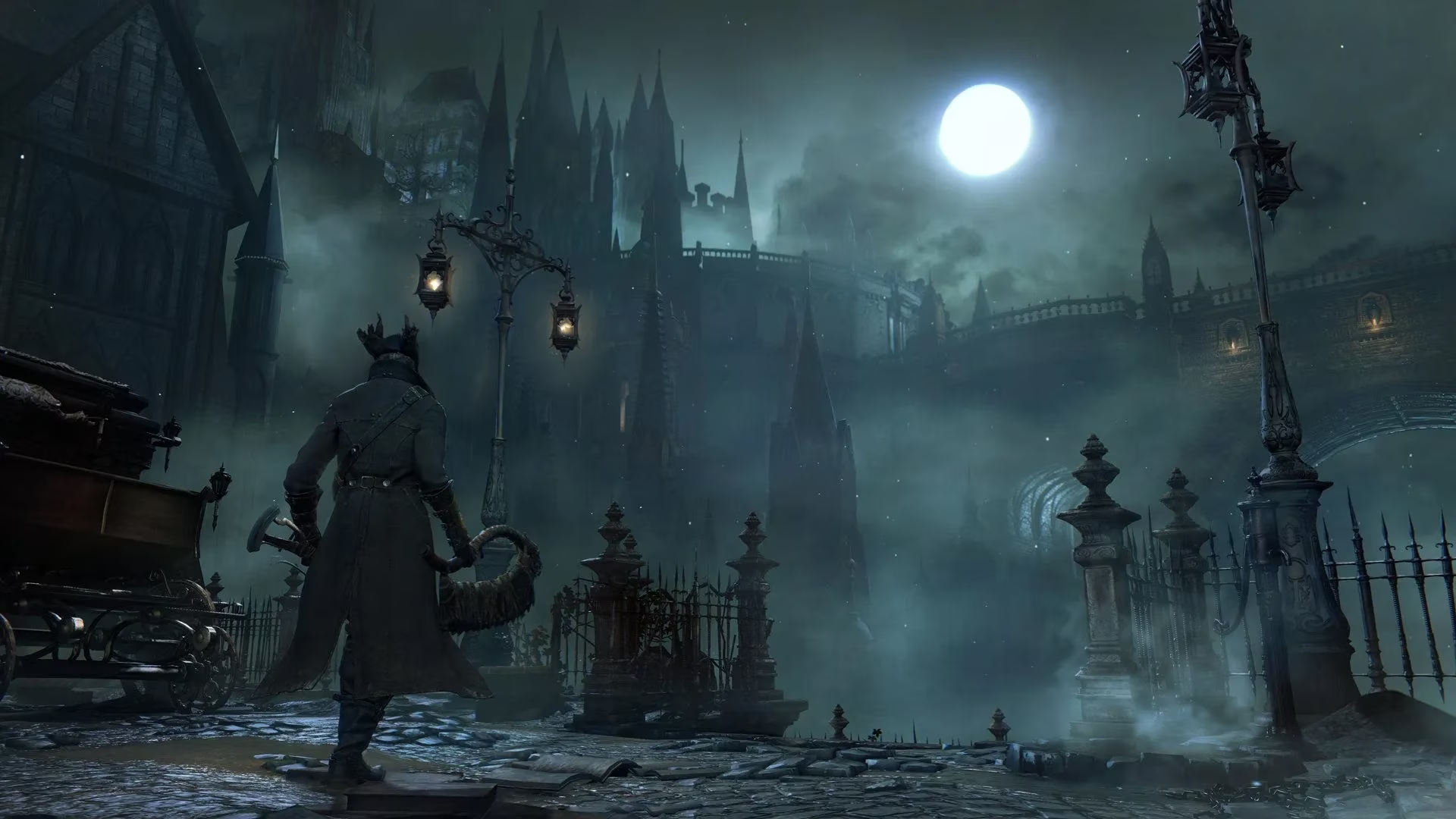
The most mechanical shock, however, arrives with the jump. Elden Ring’s dedicated jump button is more than a quality-of-life feature; it’s a spinal cord for exploration. I used it to scale ruins, dodge sweeping attacks, and reach hidden ledges without a second thought. Going back to the pre-2022 titles is like a painter losing their brush and being forced to fingerpaint. In Bloodborne and Dark Souls, jumping requires a sprint into a queasy, delayed rise—a running leap that feels like throwing a paper airplane in a hurricane. I missed platforms in Blighttown not because I lacked patience, but because the input delay turned my muscle memory into a liability. Yet, this clunky maneuver becomes a ritual. It reminds you that these older worlds demand a different rhythm, one that Elden Ring players can learn precisely because they already expect treacherous platforming hidden behind a lack of convenience.
Combat is where the preparation truly shines, albeit with a twist. At its core, Elden Ring is Dark Souls with a more permissive toolset. Guard counters, spirit ashes, and swappable Ashes of War gave me a safety net that I didn’t have in Lordran. When I first faced a Lothric Knight in Dark Souls III, my fingers instinctively searched for the guard-counter button that no longer existed. I had to strip away the innovations and return to the pure dance of shield blocks, stamina management, and spacing. But Elden Ring didn’t leave me empty-handed. It drilled into me the one universal truth of the entire catalog: persistence is not a personality trait; it’s a muscle. Beating Malenia after a hundred attempts taught me that a boss isn’t an obstacle but a conversation. That mindset transfered seamlessly to Lady Maria of the Astral Clocktower. Her twin-bladed aggression mirrored Malenia’s flurry, and while my healing was scarcer, my mental endurance held firm. I wasn’t panicking; I was listening.
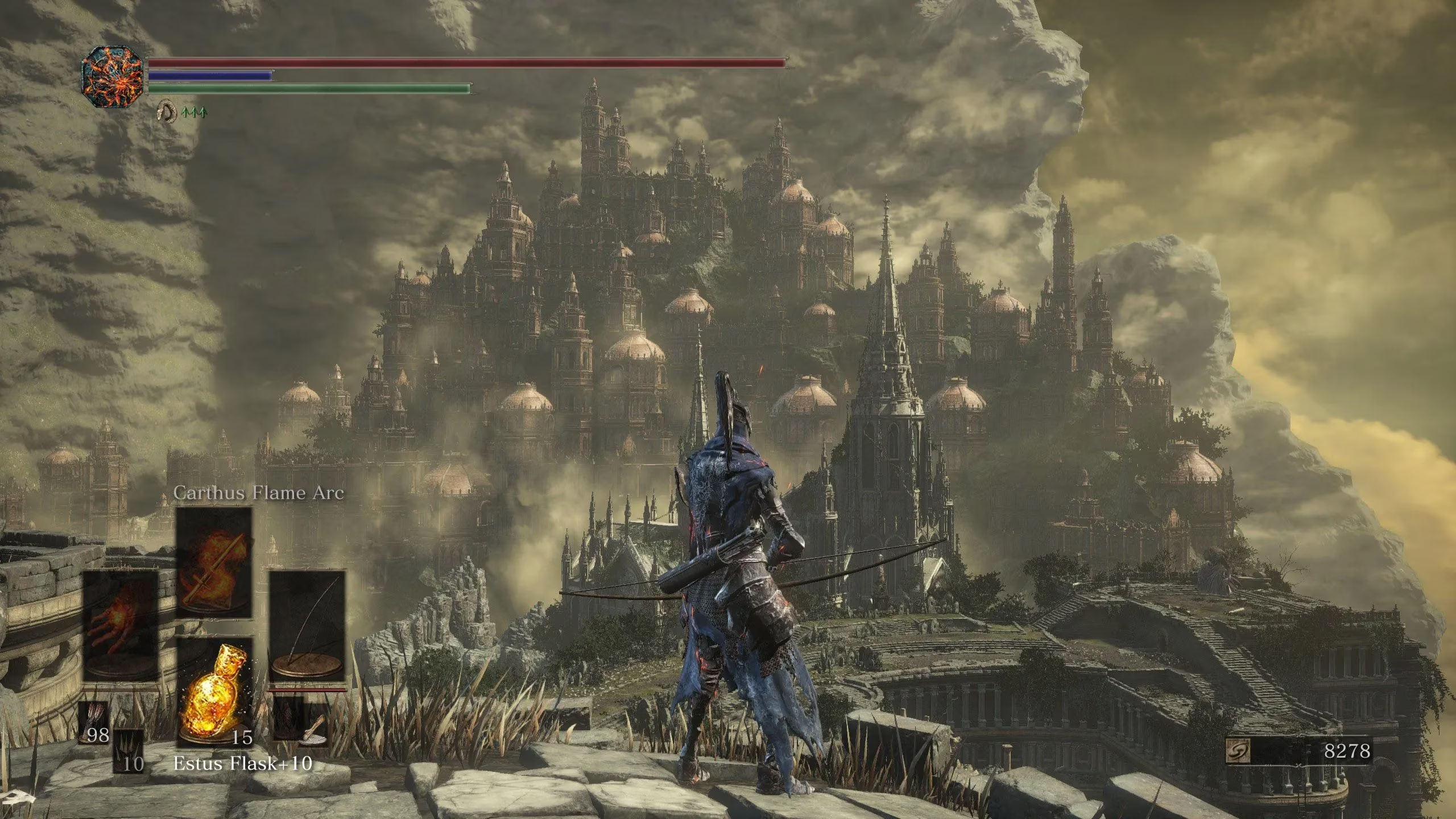
Bloodborne’s speed demanded I unlearn patience and embrace aggression, yet that adaptation felt less like learning a new language and more like switching accents. The rally system, where attacking after taking damage restores health, forces you to stay in the opponent’s face. For a shield-hugging Elden Ring veteran, this was like trading a life jacket for a jet engine. But the underlying loop remained: die, learn, adjust, overcome. 🎯 Elden Ring’s open structure had already taught me to treat death as a research expense rather than a personal failing.
By 2026, most new FromSoftware fans have never touched the original Dark Souls. They worry the older games will feel archaic or punishingly unfair. In truth, those games simply remove the training wheels while you’re already pedaling. Elden Ring gave me a sprawling playground to internalize failure analysis, map reading, and the importance of reading enemy telegraphs. Without it, Gascoigne’s third phase would have shattered my console—and my spirit. With it, I recognized the pattern: a brutal teacher whose lessons stick only when you refuse to quit. So, to anyone still hesitating in the Lands Between, eyeing Yharnam or Lordran with equal parts dread and curiosity: you are more prepared than you think. Go and claim the hunt. ⚔️
Leave a Comment