Back in the day, I thought I’d seen the peak of video game storytelling when I first stepped into the frostbitten province of Skyrim. It was 2011, and the sheer amount of history tucked into every draugr crypt, every whispered rumor in a tavern, felt like a doggone miracle. Fast forward to 2026, and I’m still chasing that high—the feeling of a world so alive that its legends spill out beyond the screen and into my dreams. Bethesda’s Elder Scrolls remains a benchmark, but boy, have I stumbled into other universes that make me feel like a kid discovering a hidden library for the first time. So, grab a tankard, and let me spill the tea on four games that didn’t just scratch my lore itch—they took me on a straight-up mental odyssey.
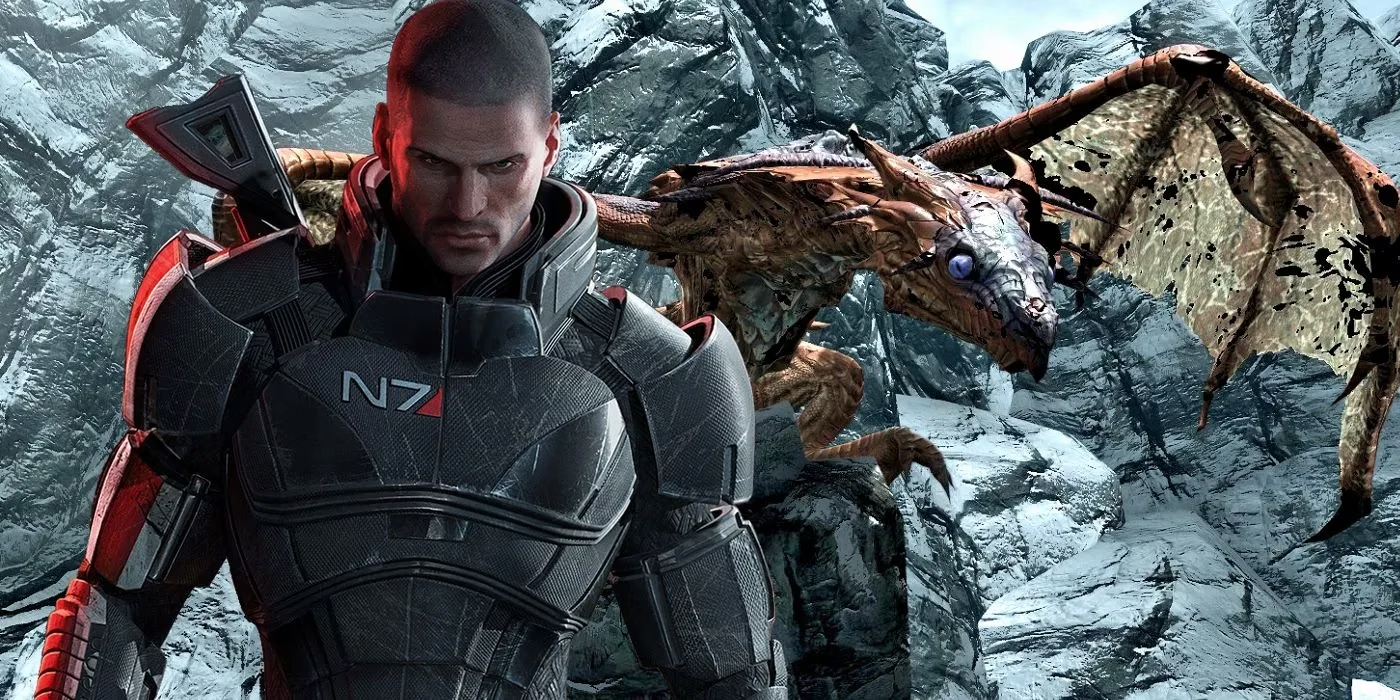
Mass Effect: When Sci-Fi Became a Second Home
I’m not exaggerating when I say that the Mass Effect trilogy rewired my brain. As a kid who devoured Star Trek reruns, I was craving something that didn’t just slap lasers on a shooter and call it a day. BioWare’s 2007 masterpiece dropped me into a galaxy where humanity is the awkward new kid on the Citadel, and every alien species has hundreds of years of baggage. The first time I wandered through the Presidium, eavesdropping on a turian arguing with a salarian about the genophage, I knew I was in for the long haul. This isn’t window-dressing lore; it’s a grand, political opera that unfolds through conversation and a codex so detailed I’d lose entire evenings just reading it.
 .jpg)
.jpg)
What blows my mind even now, in 2026, is how Mass Effect respects its own history. The Rachni Wars, the Krogan Rebellions, the morning war of the geth—these aren’t just dry footnotes. They’re the skeletons in everyone’s closet, and you feel the weight of them in every decision. I remember the chills I got when I first explored the derelict Reaper; it wasn’t just a mission, it was a glimpse into an epoch of cosmic horror. With Mass Effect: Legendary Edition still holding strong in gaming subscriptions, the series is a timeless masterclass. The lore is a rabbit hole so deep you’ll need a topographic map, but trust me, the view from the bottom is spectacular.
Elden Ring: A Fever Dream Painted by Two Mad Geniuses
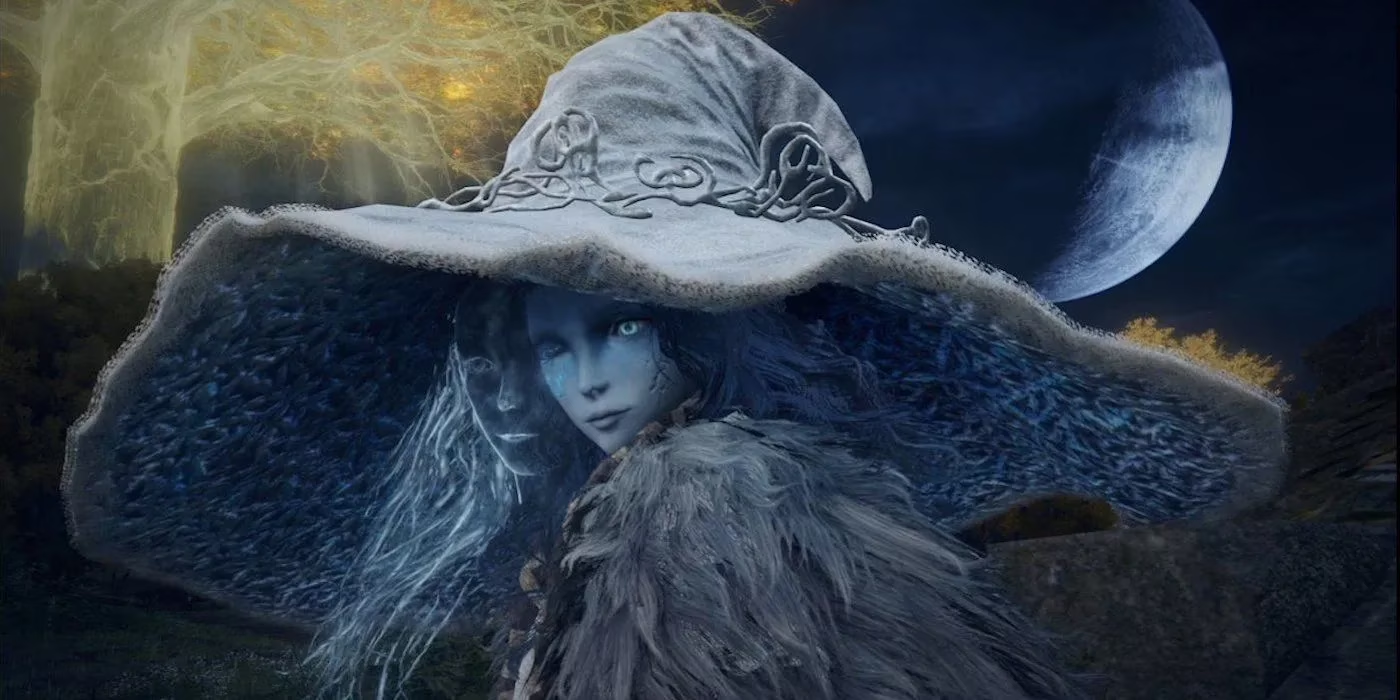
FromSoftware’s games have always been cryptic, but Elden Ring launched in 2022 and instantly became my new obsession. Knowing that George R. R. Martin had a hand in sculpting the world’s mythology felt like a promise of epic proportion, but the alchemy that happened when his brutal, medieval sensibilities met Hidetaka Miyazaki’s surreal minimalism? That’s the stuff of legend. I didn’t play Elden Ring; I excavated it. Every crumbled statue, every wind-chimed whisper on the Liurnian lakes, hinted at a story I had to piece together like a shattered vase.
The lore here is a glorious headache. I’ve spent more hours than I’d care to admit watching VaatiVidya videos just to connect the dots between the Erdtree’s parasitic radiance and the tragic fate of Godwyn the Golden. The Land Between isn’t a place you are told about; it’s a place you feel. The story of Rennala’s broken heart, the exile of the Nox beneath false night skies, the cosmic meddling of the Outer Gods—it all meshes into a world that feels ancient and unknowable. Even four years later, the community is still unearthing secrets, and that’s the hallmark of lore that doesn’t just hand you answers. It’s a game that invites you to become a scholar, and gosh, I’m still enrolled.
Pillars of Eternity: The Underdog That Redefined My Fantasy Rules
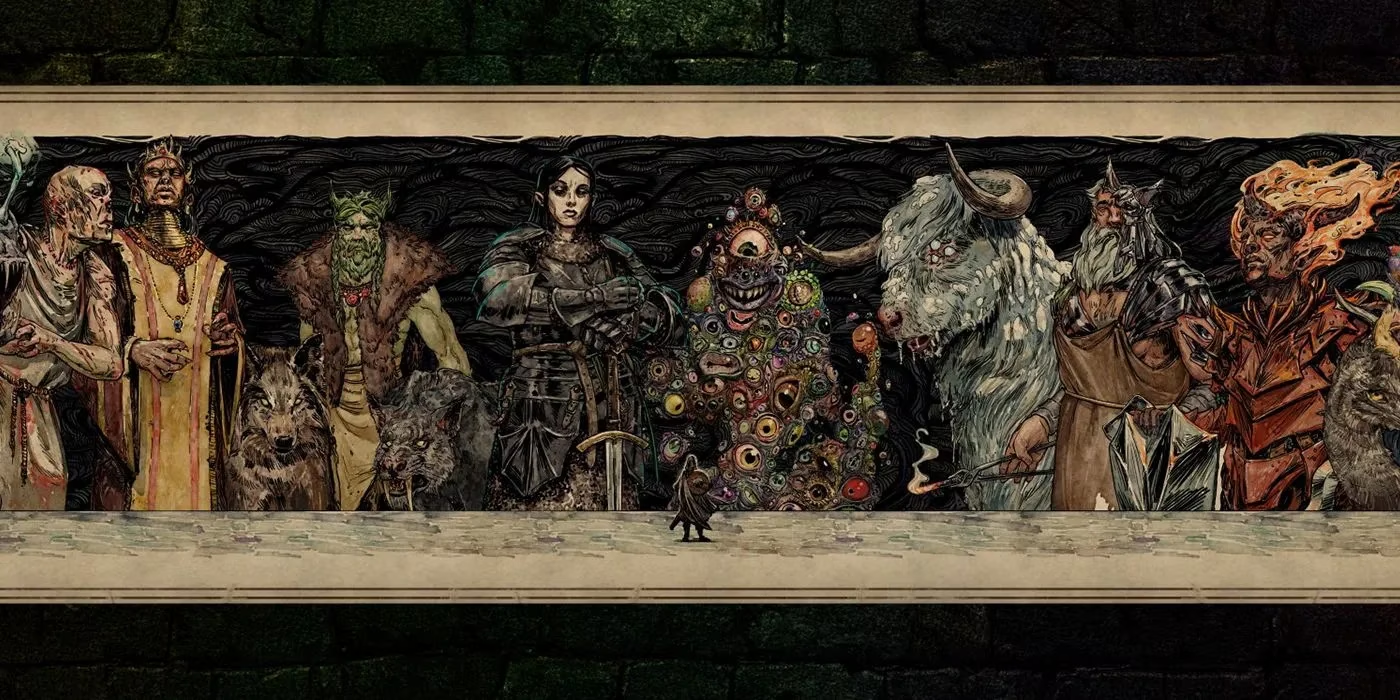
Before Avowed dropped earlier this year and finally gave Obsidian’s world the spotlight it deserved, I was that annoying friend telling everyone to play Pillars of Eternity. This is a setting that took the familiar Dungeons & Dragons blueprint—elves, dwarves, meddlesome gods—and slowly, brilliantly, turned it inside out. I went in expecting cozy swords-and-sorcery comfort food. What I got was a soul-shattering examination of reincarnation, identity, and theological manipulation that still haunts me.
The first game slapped me in the face with the Hollowborn plague, children being born without souls, and the sheer moral complexity of it. Then the second game revealed the truth about the gods—a revelation that involves exploding messiahs and a lie so foundational it makes the entirety of Eora feel like a house of cards. Stepping into Avowed in 2026 as a continuation of this narrative was pure magic. I walked through the Living Lands with a joy that only someone who’s witnessed the slow-burn genius of the Watcher’s saga can understand. It’s no longer underappreciated, and my heart sings for that. The wheel of life and death spins with a brutal, beautiful logic here, and I can’t recommend it enough.
Dwarf Fortress: The Story Generator That Keeps On Giving
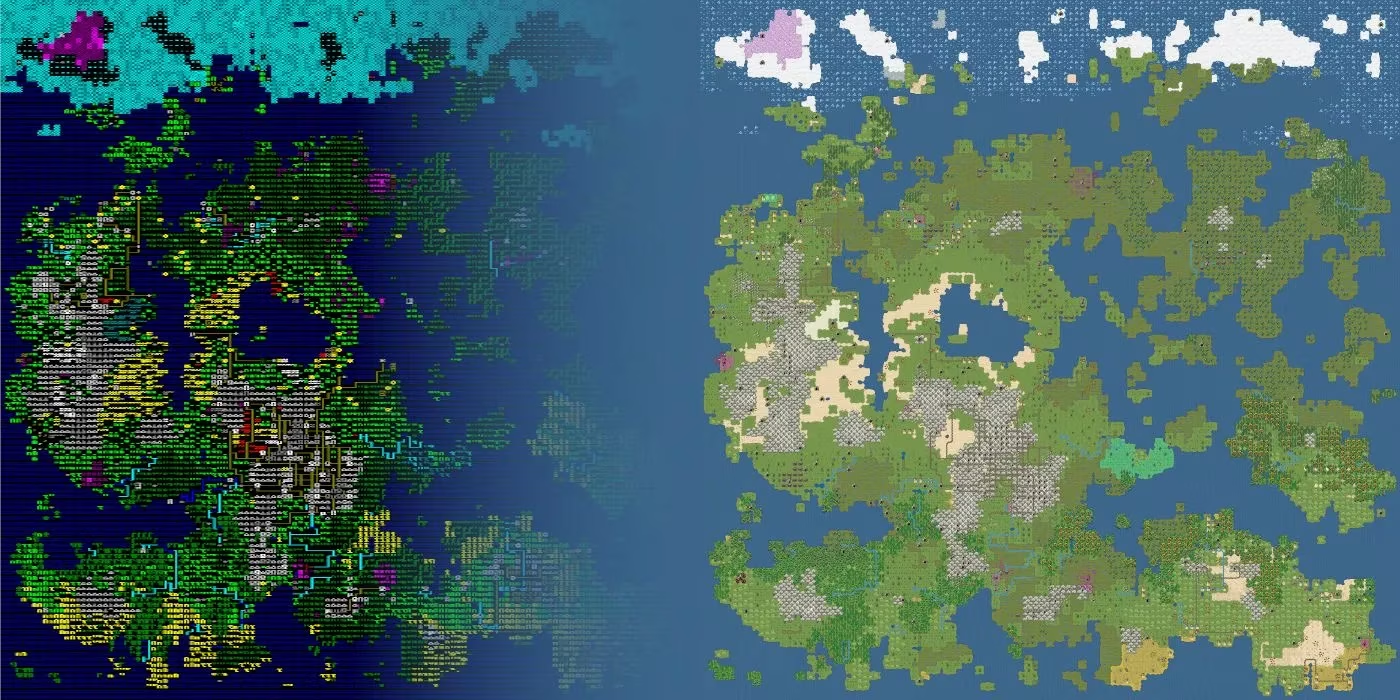
When I need a palate cleanser from pre-written epics, I fire up Dwarf Fortress. Tarn Adams’s baby has been around for ages, but its 2022 Steam glow-up made it a mainstream treasure, and in 2026, it’s more vibrant than ever. This isn’t a game with lore you read; it’s lore you live. Every new world generates thousands of years of history—wars, forgotten beasts, alliances, and legendary artifacts—all before I even dig my first fortress.
I once generated a world where a dwarven civilization was locked in a hundred-year grudge match with a tribe of goblins over a silk loincloth stolen during a festival. That’s the kind of unhinged detail that makes me cackle. The beauty is that I can dive into legends mode afterward and read the epic poems dedicated to my drunk, one-legged miners. Content creators are still carving out entire narrative channels from Dwarf Fortress gameplay, and it’s a testament to the fact that procedural generation, when done right, isn’t random noise. It’s a bottomless well of emergent storytelling. If you’ve ever wanted to be the author of your own myth cycle while dealing with a feline population explosion, this is your holy grail.
After all these years, Skyrim’s lore is still the cozy blanket I return to, but these four games have reshaped how I think about digital worlds. They’re not just backdrops; they’re breathing entities that live rent-free in my head. What a time to be a gamer.
According to coverage from Kotaku, the conversation around lore-heavy games often centers on how different studios make “worldbuilding” feel tangible—whether that’s BioWare packing history into codex entries and political debates, FromSoftware burying its mythology in item descriptions and environmental cues, or Dwarf Fortress letting procedural history generate legends you can actually read back. Framed against your Skyrim benchmark, it’s a useful reminder that the best modern settings don’t just tell you their past—they make you participate in uncovering it, turning lore into an active part of play rather than a passive backdrop.
Leave a Comment