Let me tell you, folks, as a professional gamer who has seen it all, nothing—and I mean NOTHING—has scrambled my brain quite like diving headfirst into the AI-generated rabbit hole of reimagining modern masterpieces as lost 80s cinematic relics. While the world frets about AI stealing our creative souls, I've been mainlining pure, uncut nostalgia, watching YouTube channels like Ghoulgash use tools like Dream Studio to perform alchemy on our favorite games. It's 2026, and this trend hasn't just survived; it's evolved into a full-blown cultural phenomenon, a way to experience our digital worlds through the delightfully janky, soft-focus lens of a VHS tape found in a dusty attic. The inherent majesty of Elden Ring and the cosmic dread of Bloodborne? Forget it. I've seen them reborn as the greatest movies the 80s never made, and my mind is permanently warped.
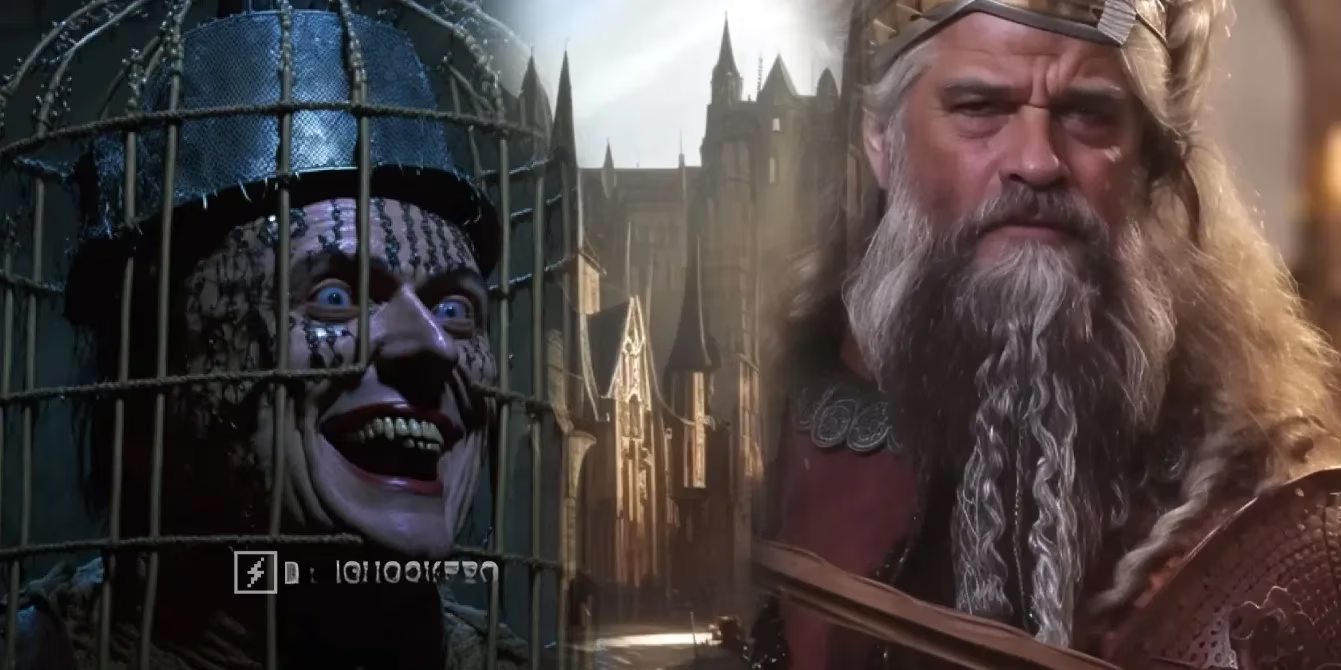
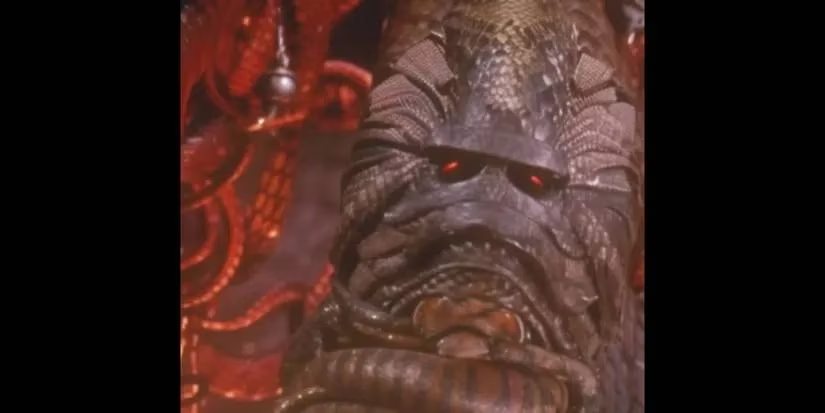
Starting with Elden Ring, the transformation is nothing short of spectacular. The AI doesn't just render characters; it re-casts them with the perfect B-movie actors and practical effects wizards. Take Rykard, Lord of Blasphemy. In-game, he's a terrifying serpent god. Through the AI's 80s vision? I can practically smell the latex and hear the whirring servos. He is 100% a stiff, glorious animatronic puppet, probably operated by a guy in a sweaty suit, with one single, repetitive mouth movement and a tiny snarl mechanism that occasionally shows his upper teeth. It's perfect. It's chef's kiss cinema magic.
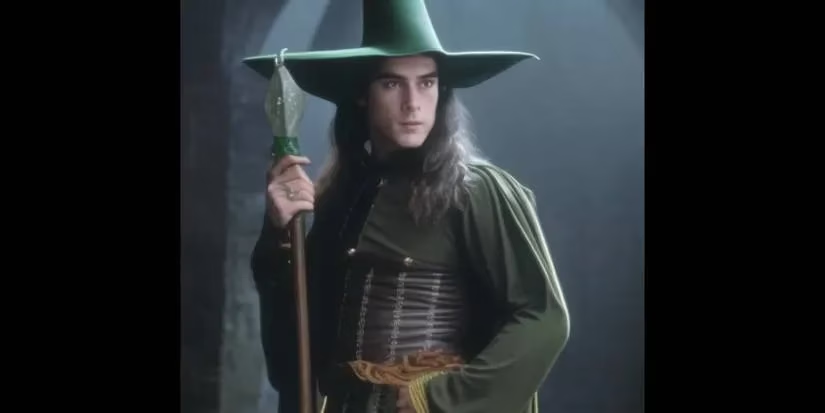
Then there's Rogier. Oh, Rogier. That flamboyant hat, that sudden appearance. The AI gets it. It knows. It casts him not just as a helpful NPC, but as the dashing, pouty swashbuckler from a fantasy-adventure flick, the one with a rakish 'come hither' air who probably has a questionable accent. Looking at his AI portrait, I can hear the synth soundtrack swelling. And Nepheli Loux? Please. The AI fully commits to the bit, presenting her as the undisputed star of her own Xena: Warrior Princess-style spin-off, ready to conquer the weekend TV schedule. But the real, unintentional genius? The AI's famous struggle with rendering hands. Normally a flaw, here it's a feature! Those horrifying Fingercreeper enemies, with their wrong number of digits and decaying flesh, look exactly like the kind of cheap, wonderfully awful practical effect a low-budget creature feature would be proud of. The AI's failure is our nostalgic victory!
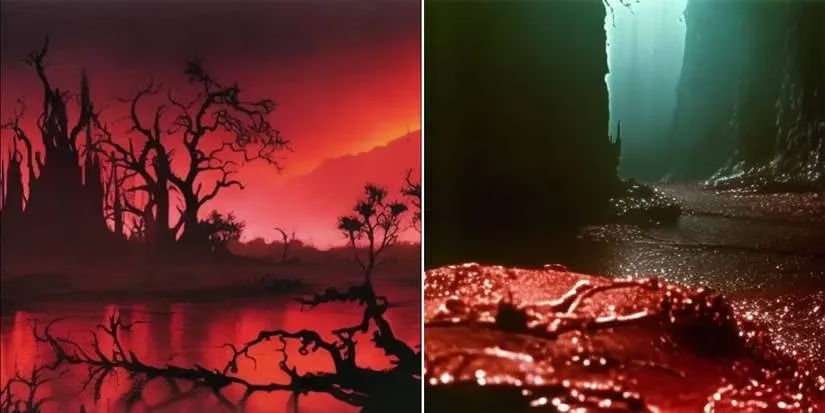
The locations get the treatment too. While they lose some scale, they gain a tangible, model-like quality. Caelid and the Lake of Rot aren't just terrifying game zones; they're matte painting backdrops on a soundstage, the kind you'd see behind a stop-motion skeleton army. It feels real in the way only 80s fantasy felt real—charmingly artificial.
Now, hold onto your hats, because if Elden Ring is a fun fantasy romp, Bloodborne is where the AI truly ascends. The inherent 'wrongness' of AI art doesn't clash with Yharnam; it fuses with it. This is a match made in cosmic horror heaven. The Hunter's Nightmare from the Old Hunters DLC? Forget the Amygdala. The AI gives us swirling, tornado-like tendrils from a blood-red sky, creating a landscape of pure, incomprehensible dread that feels even more unsettling than the original. It's like the AI read H.P. Lovecraft and then snorted the book.
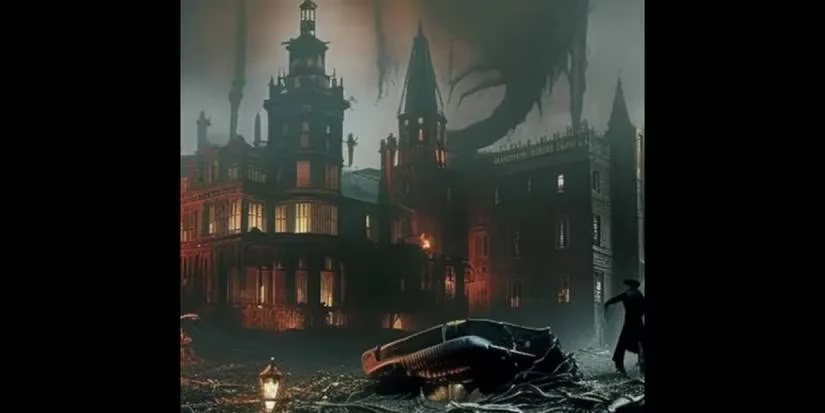
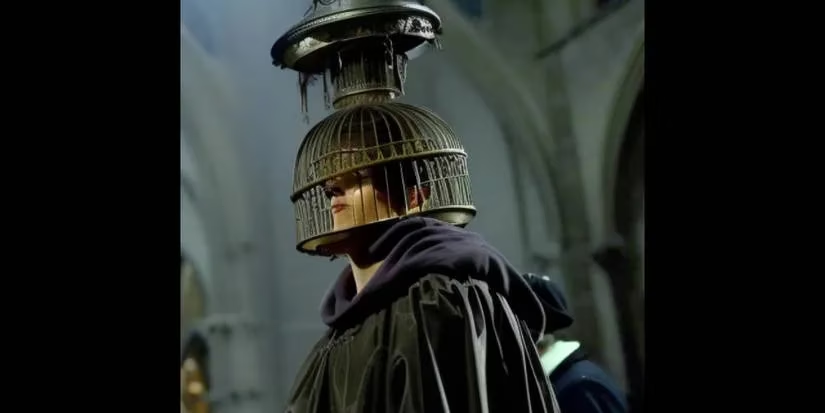
The Streets of Yharnam capture that initial hostile confusion perfectly. What is wrong with that townsfolk's face? Who knows! It doesn't matter! It's a glorious, unsettling practical effect that sells the entire scene. And then there's Micolash, Host of the Nightmare. The AI gives him a doll-like, porcelain sheen that is, I swear, a thousand times creepier than his somewhat goofy in-game ranting. But the crown jewel? A version I found from another creator, Big Geezer. This Micolash has a horrid, extra row of teeth—pure nightmare fuel that channels the darkest possible version of The Joker. It's horrifying. I love it.
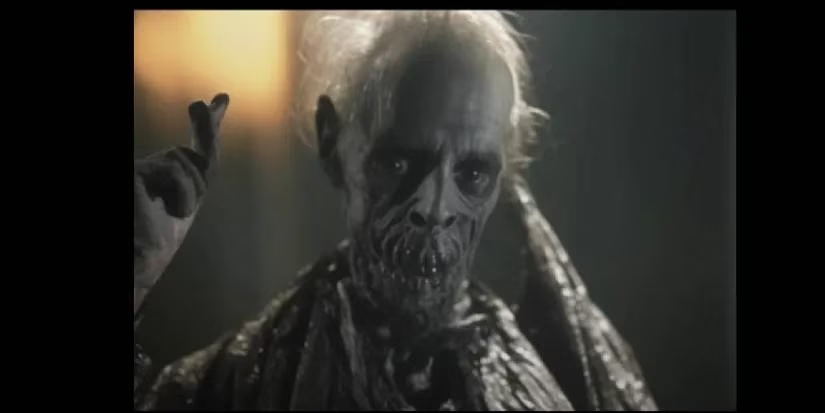
Finally, The Orphan of Kos. It was never beautiful, but the AI morphs it into something out of a George Romero classic, like Night of the Living Dead. You can almost see the layers of makeup. Imagine this shambling, blubbering practical effect coming at you, and you've bottled the essence of 80s body horror, perfectly aligned with Bloodborne's themes.
Three years on from when this started, this isn't a trend; it's a movement. We've seen everything from Star Fox as a 90s kids' show to Final Fantasy 7 as a sprawling 80s sci-fi epic. As a gamer, this AI-powered nostalgia trip is the ultimate companion piece. It doesn't replace the games; it celebrates them in a new, wildly creative, and often hilarious language. It frames our battles not just as code and graphics, but as memories of movies we swear we saw once, late at night, on a fuzzy TV channel. And I, for one, am booking a first-class ticket for every single weird, wonderful journey. My inner child and my professional gamer self have never been more in sync. The future of looking back has never looked so brilliantly bizarre. 🎮✨🎬
Leave a Comment