I stand in the vast expanse of The Lands Between, my gaze forever drawn upwards, captivated by the gilded beacon that dominates the horizon. The Erdtree. It’s more than a landmark; it’s the very soul of this fractured world, a silent witness to eons of glory and ruin. Its light, a constant in a land of chaos, feels like both a promise and a prison. I’ve walked these lands, from the windswept cliffs to the deepest, most sorrowful roots, and everywhere, the tree’s story is etched—not just in stone and scripture, but in the very flesh of history. This is not just its tale, but my reflection upon the ages it has seen.
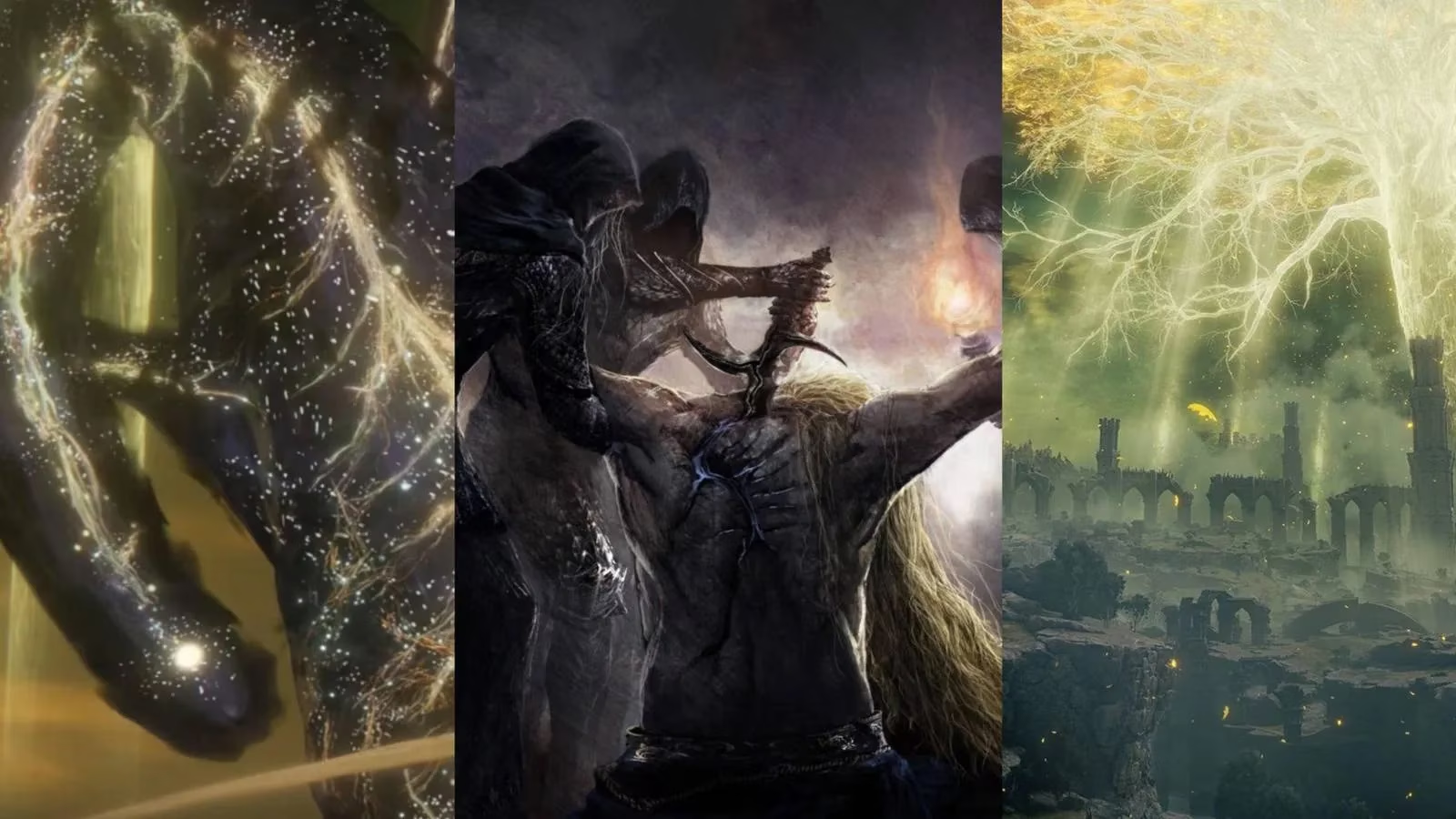
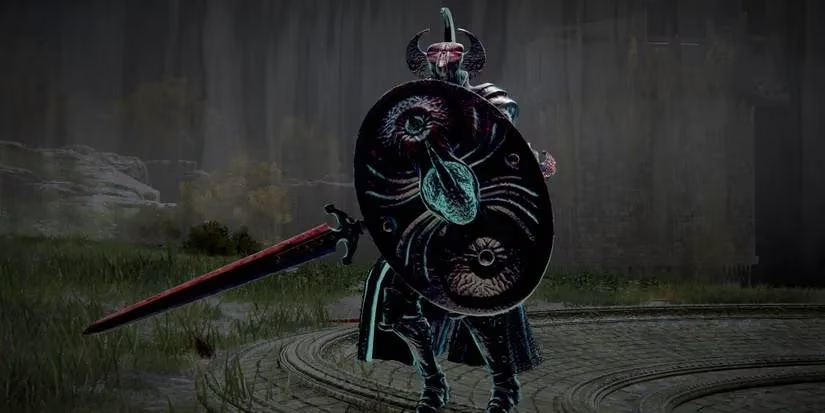
My journey to understand began not with its golden splendor, but with whispers of a time before gold. In hidden corners, in the silent, accusing gaze of a Crucible Knight, I learned of the Primordial Crucible. Ah, the past is always a different country, isn't it? Back then, they say, it was the Great Tree. No dazzling light, just a primal, raw existence. It was the heart of a world where life was... messier, more blended. The colosseums, now silent and abandoned, once echoed with the roars of warriors fighting for its glory—a glory that was fierce and untamed, not yet sanctified.
This was an age of different natives, creatures now reviled as Fell Omen. I’ve seen their kind, like Morgott, cursed and sealed away. To the Golden Order, they are blasphemy. But to me, they seem like echoes of that primordial world, natives displaced by a new landlord. It’s a twisted irony, really, that the knights who now enforce order fashion their power after these very omens—talk about cultural appropriation on a cosmic scale!
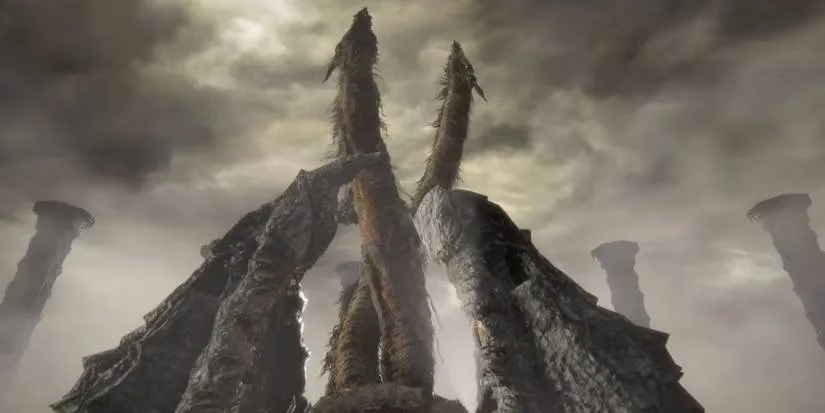
And the dragons! Don't get me started on the dragons. The beasts we fight today are but pale shadows. The true Ancient Dragons, like the slumbering king Placidusax in his crumbling Farum Azula, they remember. They remember being lords of this crucible, ruling before the concept of an 'Elden Lord' was even a glimmer in a god's eye. Their lord, I believe, was that original Great Tree itself. Now they wait, a haunting reminder that all reigns must eventually face their 'checkpoint'.
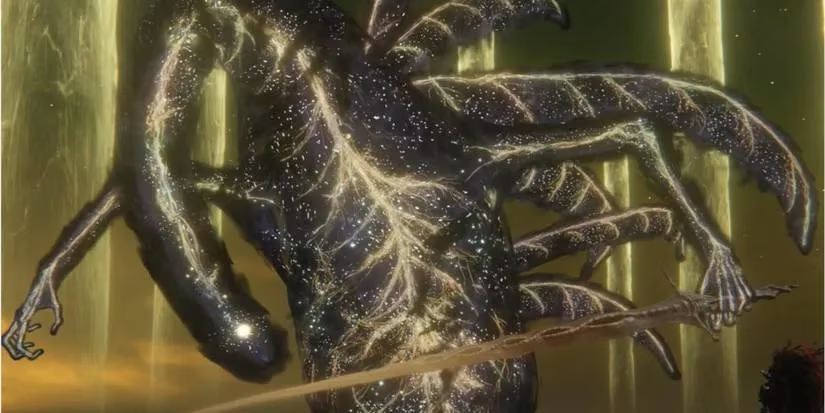
Then came the change. A paradigm shift written in starlight. The Greater Will sent its vessel—a falling star carrying the Elden Beast. This celestial parasite, for what else can I call it?, burrowed into the heart of the Great Tree and transformed it. The Erdtree was born, and with it, the Elden Ring—the new rules of reality. The tree’s roots, now channels of this new order, spread like golden veins, giving birth to Minor Erdtrees. The world was remade in a gilded image.
And at the center of it all stood Marika the Eternal. An Empyrean, a chosen vessel. Her rule was absolute. To make it last forever, she performed the ultimate surgery: she removed the Rune of Death from the Elden Ring. Natural death got the boot. In its place, she built the Golden Order, a militant faith that worshipped the Erdtree through terrifying conformity.
The list of their sins is long:
-
The Fell Omen: Imprisoned or slain.
-
The Merchants: Branded heretics and buried alive for daring to whisper of other flames.
-
The Fire Giants: Hunted to the brink for guarding the one fire that could threaten the tree.
It was brutal, efficient, and oh so golden. Death itself became the tree’s fuel. Through Erdtree Burials, the faithful were absorbed, their essence recycled, their memories hewn into the bark. In this gilded cycle, no one truly died; they just joined the choir invisible within the trunk. The tree’s presence became inescapable, a beautiful, suffocating blanket over the lands.
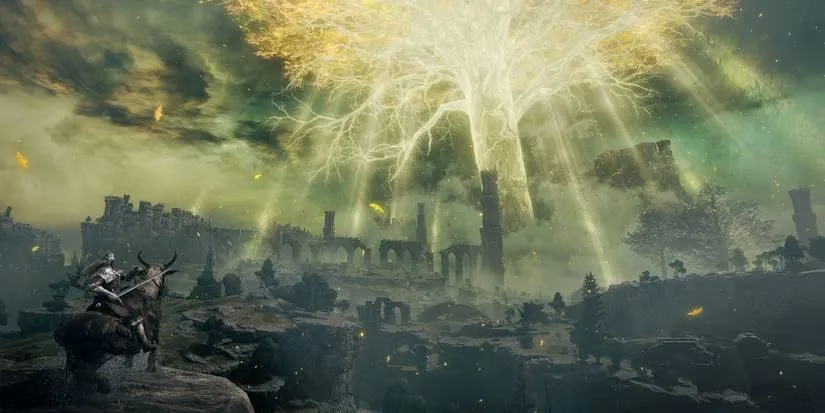
But every empire has its Achilles' heel. For the Erdtree, it was an imperfection—the very missing Rune of Death. And it was a child of two worlds, Ranni, who seized that flaw. Born of Radagon (the Golden Order’s champion) and Rennala (the Moon’s queen), she saw the tyranny in the gilded light. Her ‘mic drop’ moment was the Night of the Black Knives, using a fragment of Death to kill the demi-god Godwyn. But the plan went sideways—‘epic fail’ in the most tragic sense. Godwyn died only in soul, and his corpse, buried at the roots, festered.
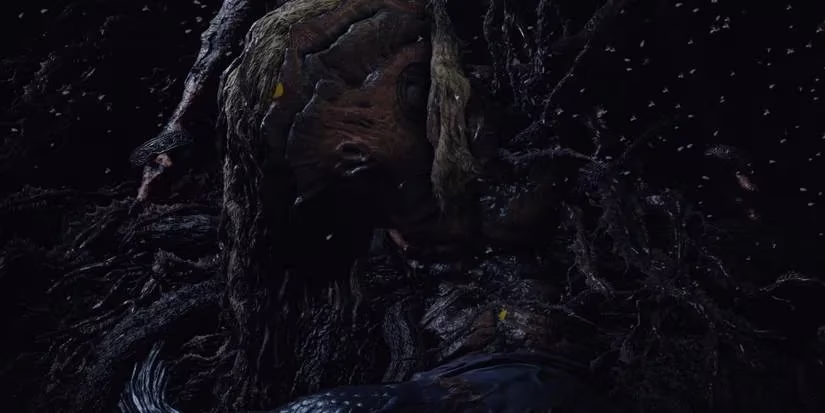
This was the beginning of the end. Death, unregulated, seeped from Godwyn into the roots, a cancer in the golden veins. It created Those Who Live in Death—the ultimate blasphemy to the Order’s perfect cycle. The Erdtree grew sick, weakened. Marika, in her despair or defiance, shattered the Elden Ring itself. The Shattering. The ultimate civil war. Now, the tree stands barricaded, burning with a thorns of denial, a glorious monument to a broken system.
So, what is the Erdtree to me now? After all I’ve seen?
It is, and always has been, a vessel. First for the wild, primordial power of the Crucible. Now for the strict, imposing will of a distant god. The colosseums, the Golden Order, the prophecies of flame—they are just stories we tell around its base. It is a symbol we fight for, die for, burn for.
The prophecies say a flame will burn it. I’ve seen the options:
-
The Frenzied Flame: To reduce it all to ash in a mad, final ‘scorched earth’ policy.
-
Ranni’s Stars: To gently usher in an age of cool moonlit doubt, where the tree is just a tree again.
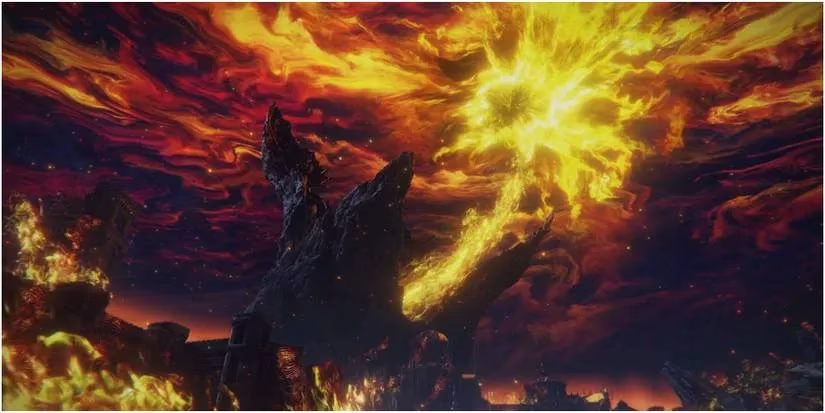
Perhaps the true future lies not in destruction or replacement, but in remembering its first nature. Miquella’s Haligtree, an attempt to grow something sacred without an Outer God’s leash, whispers of what could be. Maybe the Erdtree doesn’t need to be burned or forgotten. Maybe it just needs to be… freed. To remember it was once a Great Tree, belonging to the land and its people, not to a distant will. As I stand here in 2026, looking back on this digital saga, the Erdtree’s lesson feels timeless: even the most eternal-seeming truths are just tenants in the long rental agreement of history. The more things change, the more they stay the same—but the rent always goes up.
Leave a Comment