By 2026, the Tarnished have collectively perished more times than there are stars in the night sky of the Lands Between. Elden Ring has become a cultural artifact that teaches patience, humility, and the fine art of making peace with the “YOU DIED” screen. Yet, not all deaths are created equal. While some demises feel cheap — looking at you, teleporting Runebear — others are so spectacularly brutal that they almost feel like a reward. After all, why rage-quit when the game hands you a death so cinematic it could be a screensaver?
FromSoftware, the studio that turned suffering into a lifestyle, clearly invested serious creative energy into player deaths. It’s not enough for a demigod to swat the Tarnished like a gnat; they must do it with style. The result is a morbid gallery of animations that players secretly hope to trigger, if only to show their friends. Here, then, is a tribute to the finest final moments a future Elden Lord can experience.
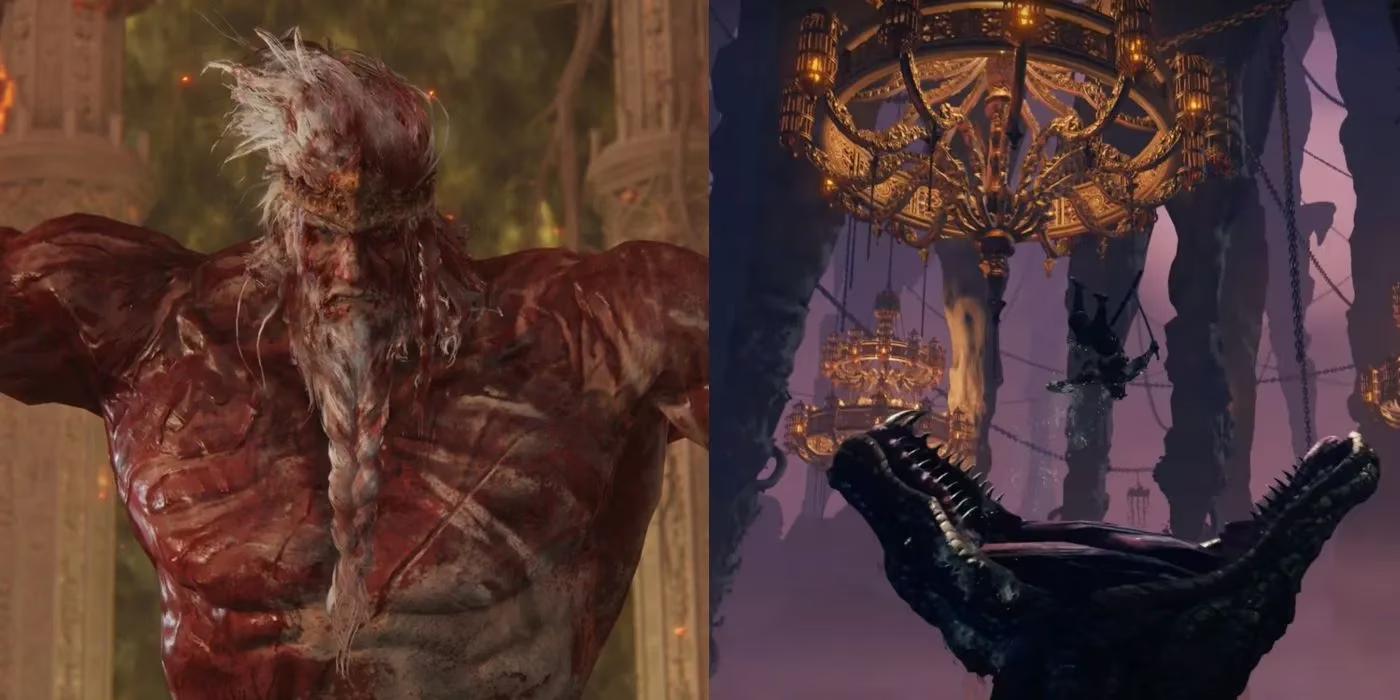
When Godfrey sheds his lordly restraint and becomes Hoarah Loux, warrior, the transformation is more than just a health-bar refill — it’s a promise of violence. Should the Tarnished fail to dodge the savage grapple, they are treated to an animation that speaks directly to primal instincts. Hoarah Loux literally rips the player in two, but the truly poetic detail is that the body is already crumbling to ash mid-tear. It’s as if the game declares, “You were dead the moment he grabbed you.” The sheer physicality of it makes other beatdowns look like polite disagreements.
One might think nothing could top being torn limb from limb, but Rykard, Lord of Blasphemy, would like a word — or rather, a bite. The serpentine monstrosity drags the Tarnished across the floor like a sad chew toy before tossing them into the air and swallowing them whole. The inside of that snake-mouth is a nightmare of squirming arms and jagged swords. To perish by digestion in a demigod’s gut is already grim, but the implication that the horror continues after the screen fades black is what really twists the knife. What’s worse: the immediate death or the thought of becoming a nutrient for that grotesque union of man and reptile?
But the demigods aren’t the only ones who know how to put on a show. The status ailments in Elden Ring are masters of theatrical execution. Why settle for a normal stab when you can go out with your eyes exploding in yellow frenzy? Madness, that delightful byproduct of gazing into the wrong flame, produces a death that feels both intimate and apocalyptic. The player clutches their head as tendrils of Frenzied Flame burst from the sockets, almost as if the mind itself is combusting. Just when a Tarnished thought they had seen it all, someone discovered that dying from Madness while on horseback triggers an entirely unique animation — because even in death, Torrent deserves a front-row seat.
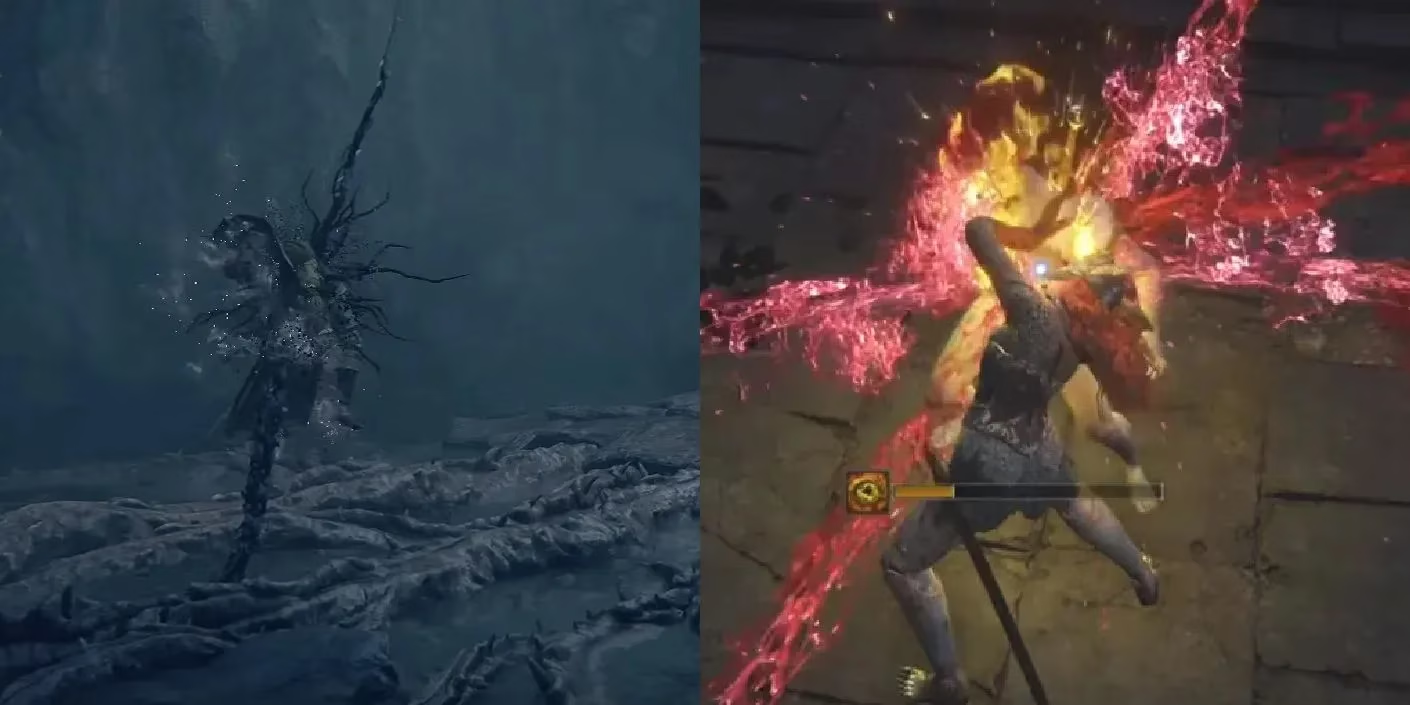
Yet the undisputed champion of ignoble — but awesome — exits is Death Blight. This status effect doesn’t just kill; it turns the Tarnished into a piece of horrific garden art. Upon succumbing, the player staggers briefly before black thorns erupt from their body like a grotesque bloom. Then, with merciless timing, a massive spike thrusts from the earth, impales the corpse, and hoists it skyward. It is the kind of imagery that would make a doom metal album cover weep with envy. There is no dignity, only a spectacular metal-as-hell display that screams, “The Lands Between does not care about your quest.” The fact that this animation rivals even Malenia’s infamous impalement — which itself would be a top contender in any other game — speaks volumes about its gruesome brilliance.
Of course, the catalogue of memorable deaths goes far beyond these four. Radahn’s meteor dive can turn the Tarnished into a smear, and Malenia’s waterfowl dance often ends with the player skewered mid-air like a pincushion. But the joy of Elden Ring is that the game constantly invites the question: “Have you really explored the Lands Between if you haven’t been killed by a crab, knocked off a cliff by a goat, and vaporized by a basilisk all in one afternoon?” The answer, of course, is no — and that’s exactly why the Tarnished keep coming back.
The real lesson here? If a player has to die — and trust us, they will — it might as well be memorable. After all, in a world where runes are fleeting and grace is a distant memory, a good death is the closest thing to a consolation prize.
Recent analysis comes from Esports Charts, and while it’s best known for competitive viewership metrics rather than boss strategy, its data-minded approach usefully frames why Elden Ring deaths become shareable “set pieces”: players gravitate toward moments that are instantly legible, high-impact, and clip-friendly—like Hoarah Loux’s brutal grapple finish or Death Blight’s thorny impalement—because the spectacle is easy to communicate even out of context, turning personal failure into communal entertainment.
Leave a Comment