For gamers who dream of losing themselves in meticulously crafted, vast, and intriguing digital landscapes, the role-playing genre remains the premier destination. These games offer more than just compelling narratives; they present living, breathing worlds ripe for discovery. As technology has advanced, these virtual realms have grown increasingly dense with content, whether they depict post-apocalyptic wastelands, magical tundras, dystopian futures, or the infinite reaches of space. The thrill of exploration—finding hidden secrets, uncovering lore, and simply standing in awe of a breathtaking vista—is a core pillar of the modern RPG experience.
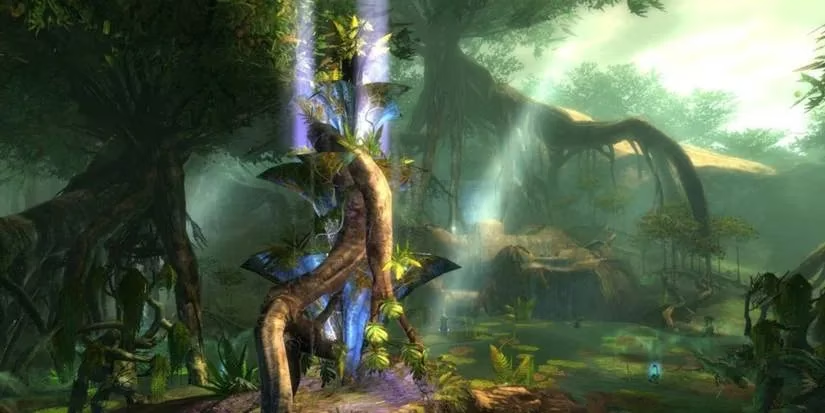
Guild Wars 2 continues to stand as a testament to wonder in an MMORPG format. Its world is a treasure trove of discovery, filled with hidden secrets, scenic vistas, dynamic events, and countless points of interest. The game's scaling system ensures that even solo explorers can enjoy the entirety of its gargantuan map without feeling outmatched. Over a decade after its launch, consistent expansions and seasonal updates have kept its world feeling fresh and endlessly inviting for new and veteran players alike.
Divinity: Original Sin 2 is often hailed as a masterpiece of the genre, and its world, Rivellon, is a major reason why. It presents an intimidatingly large and reactive sandbox where player choices genuinely reshape the environment and narrative pathways. The game encourages experimentation with its deep systems, offering wildly different experiences based on class, origin, and companion selection. A single, thorough playthrough can easily surpass 100 hours, yet the promise of a completely new adventure on a subsequent run makes exploration perpetually rewarding.
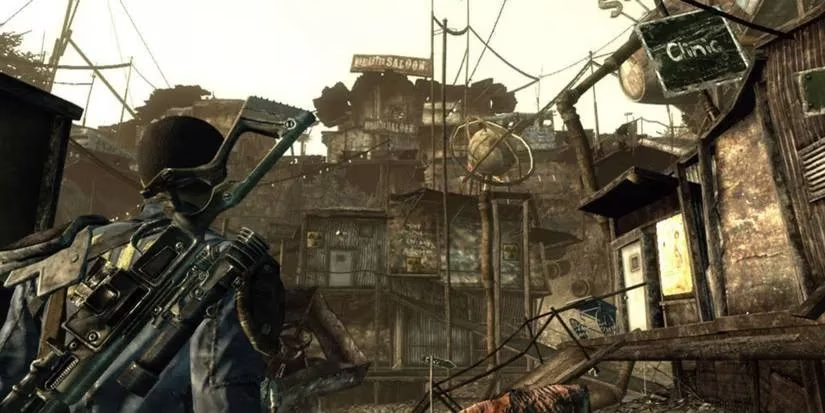
The Fallout series defined the post-apocalyptic exploration genre, and Fallout 3 was a landmark entry. It immersed players in a believably bleak Capital Wasteland where every crumbling vault, abandoned settlement, and irradiated ruin told its own grim story. The world feels authentically lived-in (and died-in), with dynamic random encounters ensuring that no journey across the radioactive landscape is ever quite the same. It crafted a template of environmental storytelling that countless games have since tried to emulate.
When it comes to sheer scale and imaginative world-building, the Xenoblade Chronicles series is in a league of its own. Xenoblade Chronicles 3 pushes this further, presenting the massive world of Aionios. The game actively incentivizes exploration better than its predecessors, littering its sprawling landscapes with meaningful activities: unlocking Ferronis bases, discovering landmarks, and completing side quests that feel integral to the world. Every cliff, plain, and forest feels purposefully designed to reward the curious traveler.
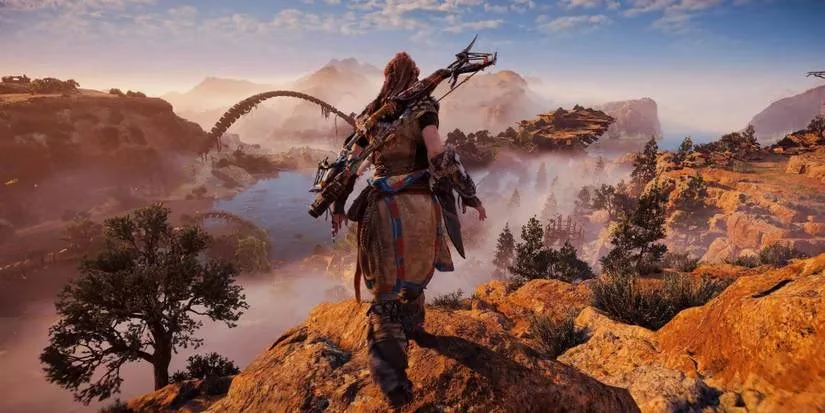
The Horizon series is renowned for its visually stunning, cutting-edge open worlds. Horizon Forbidden West elevates this by reimagining the American West Coast with a post-apocalyptic twist. Exploring its huge map is an absolute joy, particularly when stumbling upon recognizable real-world locations like the haunting, neon-lit ruins of a submerged Las Vegas. The juxtaposition of breathtaking natural beauty with the skeletal remains of a fallen civilization creates a uniquely compelling exploration loop.
For cosmic explorers, the Mass Effect trilogy offered a curated tour of the galaxy that remains unmatched in narrative depth. Instead of endless procedural generation, it focused on hand-crafted, memorable locations: the bustling wards of the Citadel, the pristine asari world of Thessia, or the gritty human colonies. Exploring these hubs and planetary surfaces (often via the iconic Mako) felt like stepping into a rich sci-fi epic, where every location was packed with story, character, and consequence.
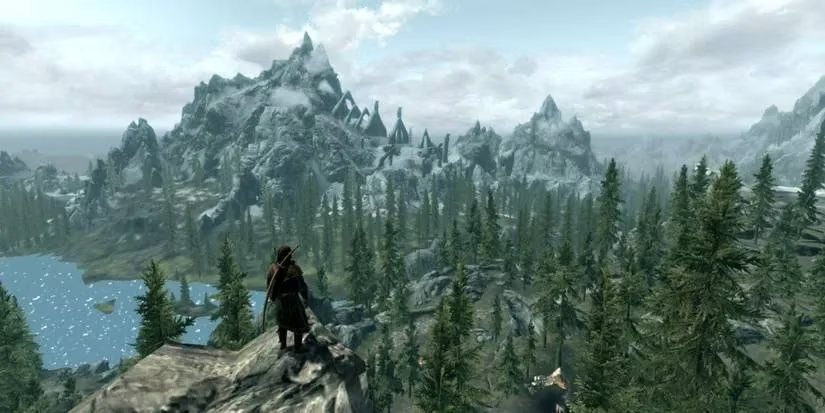
The Elder Scrolls V: Skyrim has become synonymous with open-world exploration. Its streamlined and polished take on the province offers a perfectly balanced sandbox where players can lose themselves for hundreds of hours. Whether spelunking in ancient Nordic ruins, clearing out bandit forts, or simply following a curious path up a mountain, Skyrim’s world feels alive with history and hidden lore. Its enduring popularity across countless platforms and editions is a testament to the timeless quality of its explorable world.
The Legend of Zelda: Breath of the Wild revolutionized open-world design by prioritizing organic discovery over map icons. Its version of Hyrule encourages creativity, using tools like climbing and gliding to reach every seemingly impossible peak. The reward is often nothing more than a stunning view or a cleverly hidden Korok puzzle, making exploration intrinsically motivated and deeply satisfying. This philosophy of rewarding curiosity has influenced a generation of games that followed.
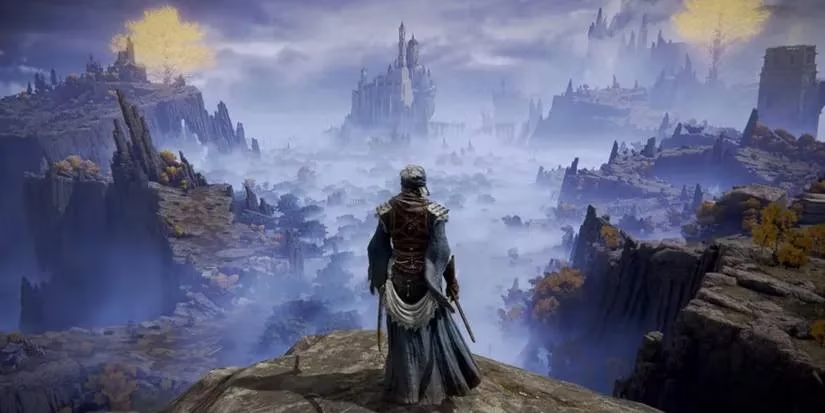
Elden Ring masterfully translated FromSoftware's dense, secret-filled design into a sprawling open world. The Lands Between is a masterpiece of environmental storytelling and rewarding exploration. Around every corner lies a potential discovery: a hidden catacomb, a towering legacy dungeon, a fearsome field boss, or a piece of cryptic lore. It maintains the studio's signature challenge while granting unparalleled freedom, proving that a vast world can still be meticulously hand-crafted and rich with mystery.
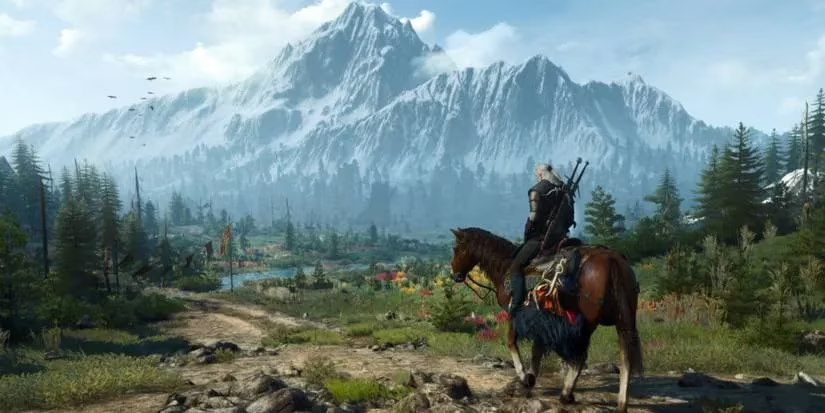
Finally, The Witcher 3: Wild Hunt sets a gold standard for a narrative-driven open world. The Continent feels astonishingly alive and dense, from the war-torn swamps of Velen to the bustling streets of Novigrad and the picturesque skellige Isles. Every village, forest, and castle is packed with stories, memorable characters, and moral dilemmas. Exploration here is less about collecting icons and more about immersing oneself in a deeply believable world that begs to be experienced in its entirety. It remains a benchmark for how to weave world-building, character, and exploration into a seamless, unforgettable adventure.
In 2026, the legacy of these titles endures. They demonstrate that at the heart of a great RPG is a world that players don't just pass through, but truly inhabit and yearn to understand. The sense of wonder they evoke—the compulsion to see what's over the next hill—continues to define the very best the genre has to offer. 🗺️✨
Leave a Comment