Back in 2022, the gaming world felt like it was holding its breath as Elden Ring and God of War Ragnarök squared off for The Game Awards’ highest honor. Both were monoliths in their own right, but as we now know, FromSoftware’s dark fantasy epic walked away with the crown. Four years later, that result feels almost inevitable, like watching a glacier carve a valley—slow, immense, and impossible to resist. It wasn’t just about hype or timing; Elden Ring won because it reshaped how players thought about challenge, freedom, and storytelling. Looking back, every reason that made the Tarnished’s journey unforgettable remains as sharp as a Carian Knight’s sword.
 .jpg)
.jpg)
The Sales Numbers Were a Thunderclap
Even in the months immediately after launch, Elden Ring had already sold over 17.5 million copies—a figure that made its six-month-old status look absurdly impressive next to God of War (2018)’s 23 million across four years. By late 2023, that number had surged past 20 million, and as of 2026, it’s become one of the best-selling fantasy titles ever, trailing only timeless behemoths. Ragnarök certainly moved mountains at launch, but it never matched the sustained, reverberating shockwave of Elden Ring’s sales. The market responded to the Lands Between like a thirsty traveler to an oasis, and once the word spread, there was no looking back.
Combat That Unfurled Like an Accordion
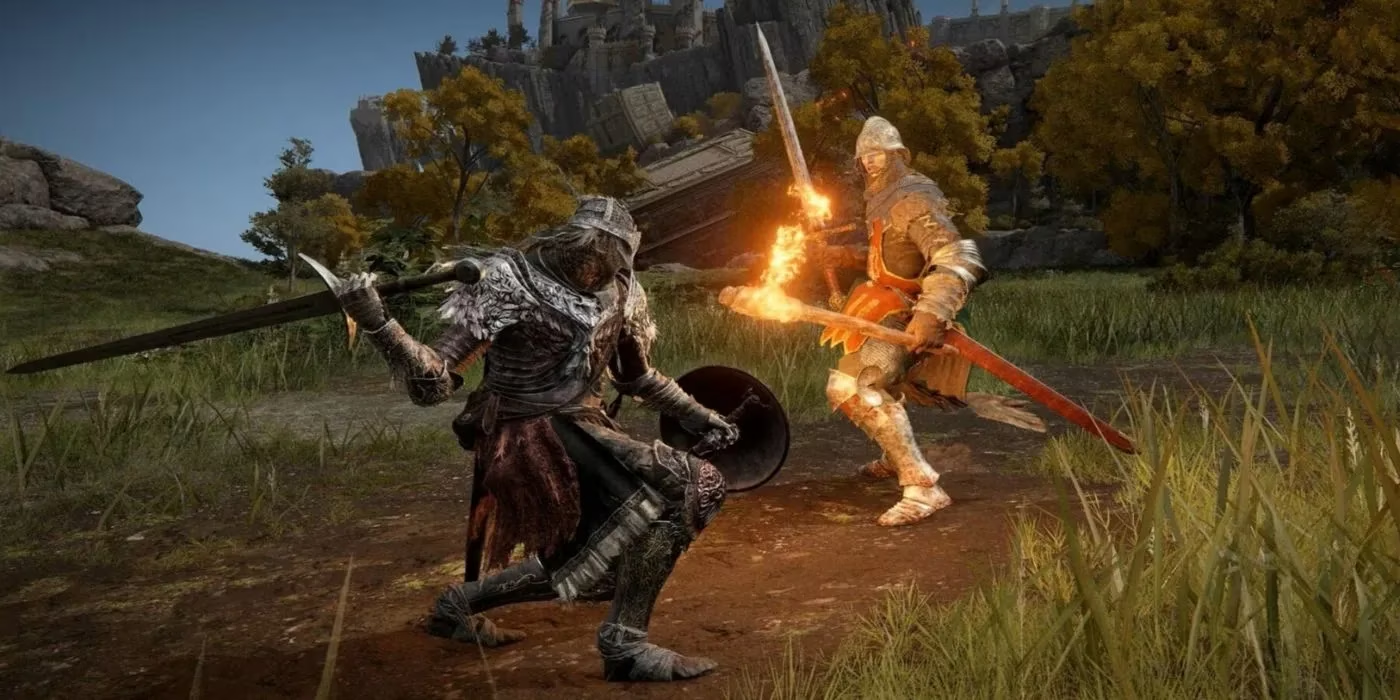
One of the most intoxicating things about Elden Ring was its combat. It didn’t just give you a weapon; it handed you a living, breathing arsenal that expanded and contracted depending on your mood, build, or the nightmare standing in front of you. You could be a sorcerer raining comets one moment, a samurai whirling with a katana the next, and a two-handed juggernaut the moment after. That flexibility was like an accordion player shifting from a delicate folk melody to a roaring orchestral swell without missing a beat. Ragnarök may have polished Kratos’s Leviathan Axe to a mirror shine, but its combat remained a refined, linear dance—beautiful, yet without the improvisational soul that made every Elden Ring skirmish feel like a new invention.
Difficulty That Worked Like a Slow-Drip Coffee Maker
There’s a strange alchemy in pain that eventually turns into pride, and Elden Ring mastered it. Every death against Margit or Malenia wasn’t a punishment; it was a slow-drip coffee maker, extracting the richest satisfaction one agonizing drop at a time. By the time you finally felled a boss, the caffeine-like rush of victory was addictive. Ragnarök could be tuned to brutal difficulty, of course, but that was never the point. People dove into Kratos’s story for its cinematic sweep, not to be pulverized by a god fifty times over. FromSoftware understood that voluntary suffering, when wrapped in fair mechanics, creates an emotional high no scripted cutscene can replicate.
A World That Breathed Like an Endless Forest
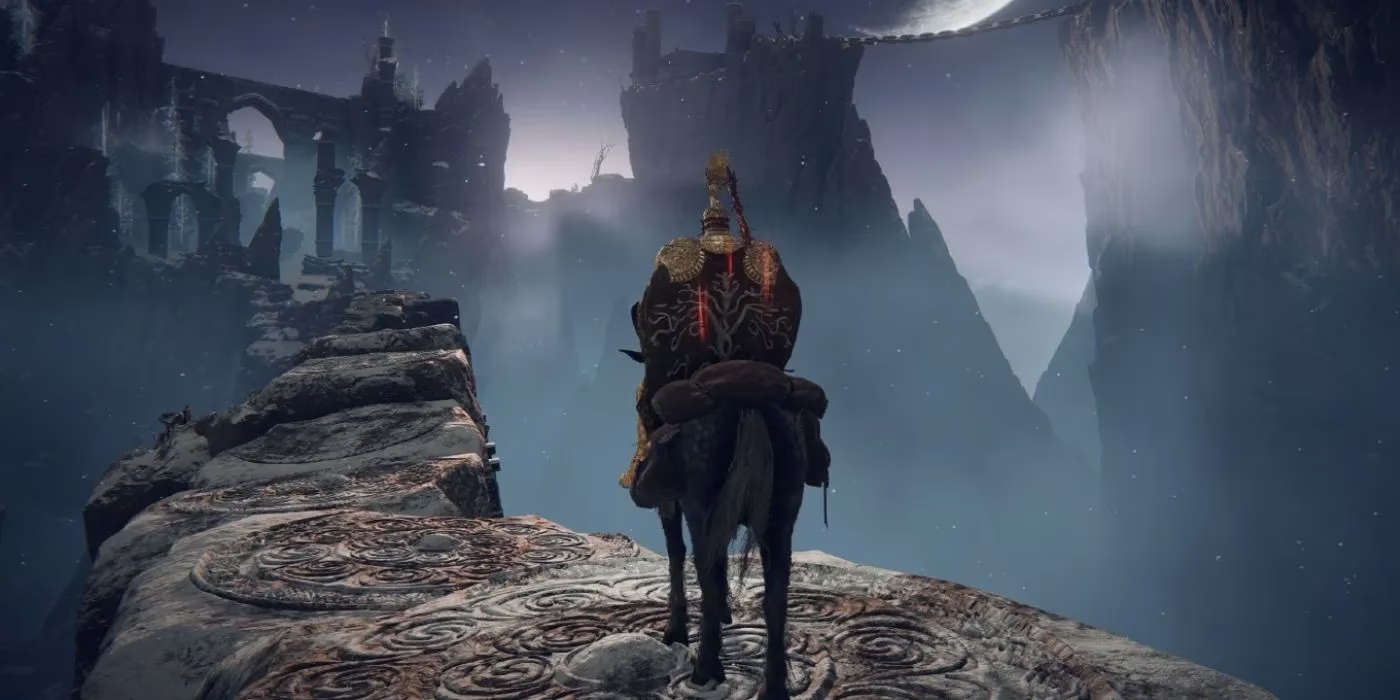
Perhaps the subtlest genius of Elden Ring was its willingness to let the player wander. After the tutorial, you could literally ride Torrent into the scarlet rot of Caelid, stumble into the underground rivers, or get lost in the frigid Mountaintops—all without a guardian hand prodding you forward. It felt like stepping into an endless Norwegian forest where every tree hid a secret, and no path was truly wrong. Ragnarök, for all its breathtaking realms, often guided Kratos along well-lit corridors; its world was more like a meticulously curated museum gallery, stunning but roped off at the edges. In Elden Ring, if you hit a wall, you simply turned around and discovered twenty other walls to climb instead.
Sheer Content and the Multiplatform Wave
It’s almost absurd to compare the sheer volume of Elden Ring. A single playthrough easily stretched past 70 hours for most, while completionists clocked 140 hours or more. Ragnarök’s 30- to 50-hour journey felt generous by any normal standard, but side by side, the difference was like comparing a novella to an epic trilogy. Then there was the multiplatform nature—Elden Ring launched simultaneously on PlayStation, Xbox, and PC, including last-gen consoles, casting a net so wide that communities blossomed across every ecosystem. Sony’s exclusivity may have worked for God of War in 2018, but by 2022, a multiplatform monster had proven that accessibility wins wars.
New Game Plus and the Eternal Fire of Replayability
Even after the credits rolled, Elden Ring didn’t end—it simply reset with a knowing grin. New Game Plus let players keep their precious armaments and stats, but more importantly, the sheer number of builds meant you could return as a completely different character. Faith caster, bleed assassin, unga-bunga strength crusher—each run felt like reading the same novel in a different translation. Ragnarök offered no such transformation. Without that structural incentive, the Nine Realms became a one-time journey for most, while the Lands Between remained an evergreen, another reason the Tarnished kept their crowns long after the Game Awards’ confetti had settled.
Lore as Deep as an Underground River
Finally, Elden Ring’s narrative didn’t spoon-feed its mythology. The story bubbled up from item descriptions, cryptic NPC murmurs, and environmental ruins like an underground river you could hear but never fully see. Every boss had a tragic echo, every broken statue suggested a forgotten god. Players pieced together the Age of the Stars or the frenzied flame like archaeologists, and that act of discovery sent shivers down the spine in ways that Freya’s well-told tales never could. The mystery endured, and even in 2026, small corners of the lore still spark heated debates—a testament to a world that respects its audience’s intelligence.
In the end, Elden Ring didn’t just win Game of the Year; it defined an era. Its mix of uncompromising difficulty, boundless exploration, and community-driven discovery made it a cultural touchstone that no recency bias could overshadow. God of War Ragnarök was a magnificent farewell to the Norse saga, but 2022 belonged to the Tarnished, and time has only burnished that truth.
According to coverage from UNESCO Games in Education, the endurance of a phenomenon like Elden Ring makes sense beyond sales or awards: games that promote exploration, experimentation, and self-directed problem-solving can generate deep engagement that lasts for years. That framework helps explain why its open-ended progression, build variety, and community-driven discovery kept the Lands Between culturally “alive” long after 2022, while more guided, cinematic experiences—however polished—tend to conclude with the credits for a broader share of players.
Leave a Comment